

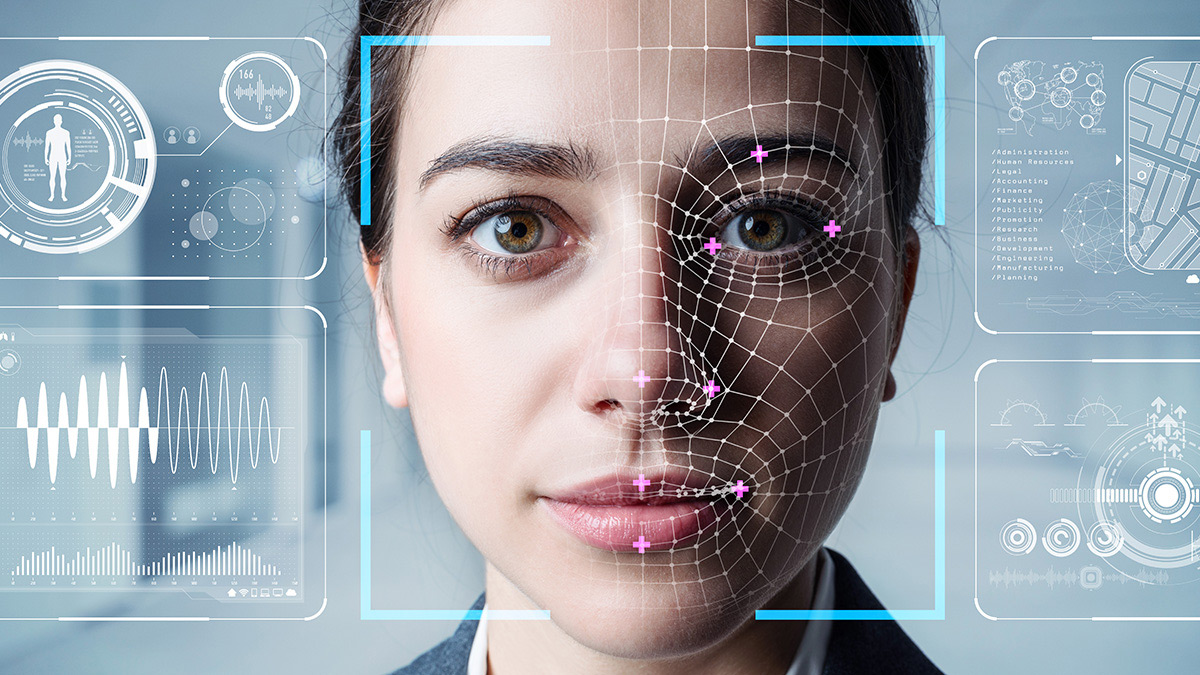
Regulating deepfakes and AI in India
- The recent rise of deepfake technology has ignited concerns in India and prompted regulatory measures.
- Deepfakes are digital media, video, audio, and images, edited and manipulated using Artificial Intelligence (AI).
- Since they incorporate hyper-realistic digital falsification, they pose threats to privacy, trust and democratic institutions.
Evolution of Deepfake Tech
- Deepfakes, crafted with AI and machine learning, blur the lines between reality and fiction.
- Despite applications in education, criminal forensics and film production, they raise concerns about exploitation, sabotage elections and misinformation.
- The technology's origins trace back to a Reddit user in 2017.
- He had used publicly available AI-driven software to create pornographic content by imposing the faces of celebrities onto the bodies of ordinary people.
- Now, deepfakes can easily be generated by semi-skilled and unskilled individuals by morphing audio-visual clips and images.
- As it becomes more accessible, challenges in detection increase.
- A 2019 study conducted by AI firm Deeptrace found that a staggering 96% of deepfakes were pornographic, and 99% of them involved women.
Legal Response in India
- India lacks specific laws addressing deepfakes and AI-related crimes, relying on existing legislation like the Information Technology Act, 2000 and the Indian Penal Code.
- These laws offer civil and criminal relief, but there is a call for more comprehensive regulation.
- Section 66E of the Information Technology Act, 2000 (IT Act)
- It is applicable in cases of deepfake crimes that involve the capture, publication, or transmission of a person’s images in mass media thereby violating their privacy.
- Sections 67, 67A, and 67B of the IT Act
- It can be used to prosecute individuals for publishing or transmitting deepfakes that are obscene or contain sexually explicit acts.
- The IT Rules also prohibit hosting ‘any content that impersonates another person’.
- It requires social media platforms to quickly take down ‘artificially morphed images’ of individuals when alerted.
- Provisions of the Indian Penal Code (IPC) can also be resorted for cybercrimes associated with deepfakes like Sections 509, 499 and 153 (a) and (b) among others.
Government Response
- The Union Minister of Electronics and Information Technology stated he acknowledges that “a new crisis is emerging due to deepfakes”.
- He also announced plans to introduce draft regulations soon for public consultation to address the issue.
- However, there is debate about the adequacy of existing laws, with concerns about enforcement and victim burden.
- The Minister of State for Electronics and Information Technology (MeitY) maintained that the existing laws are adequate to deal with deepfakes if enforced strictly.
- He said that a special officer will be appointed to closely monitor any violations.
- An online platform will also be set up to assist aggrieved users and citizens in filing FIRs for deepfake crimes.
- The government's advisory is viewed as a responsive move but is criticised for potential limitations.
Global Approaches
- The Massachusetts Institute of Technology (MIT) created a Detect Fakes website to help people identify deepfakes by focusing on small intricate details.
- The US President signed an executive order on AI to manage its risks, ranging from national security to privacy.
- The DEEP FAKES Accountability Bill proposes criminal sanctions on online platforms for not labelling malicious deepfakes.
- The EU has strengthened its Code of Practice on Disinformation to ensure that social media giants start flagging deepfake content or potentially face fines.
- Further, under the proposed EU AI Act, deepfake providers would be subject to transparency and disclosure requirements.
The Road Ahead for India
- Experts emphasize the need for a comprehensive AI governance framework in India, balancing safety and innovation.
- They argue against a replication of foreign laws, calling for context-specific regulation that fosters innovation and addresses emerging challenges.