

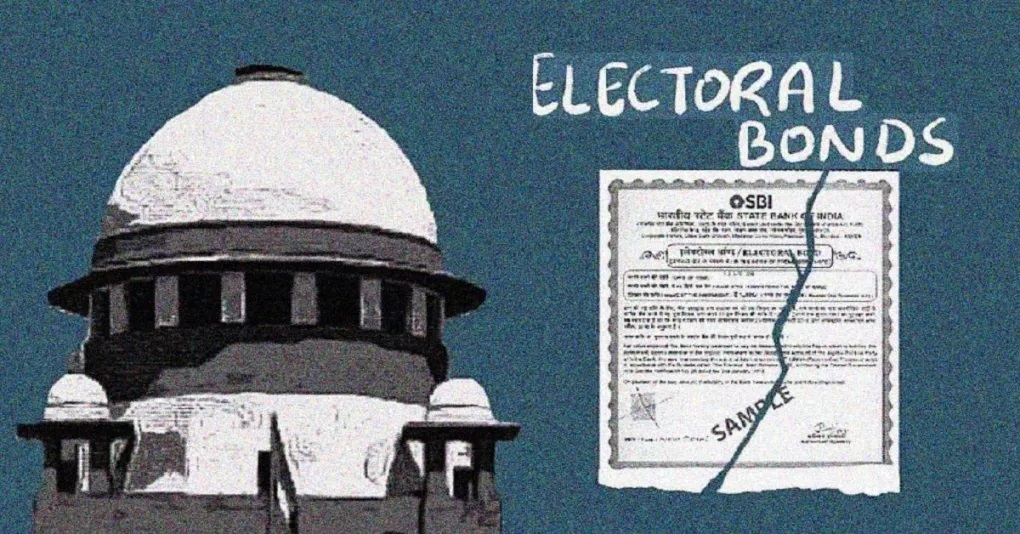
Proportionality in Electoral Bonds case
- Recently, the Supreme Court, led by the Chief Justice of India, unanimously invalidated the electoral bonds scheme, citing disproportionate restrictions on free speech.
- The examination of the electoral bonds scheme revolved around whether the state's intrusion into individual rights proportionately served its goals - curbing black money and protecting donor privacy.
Proportionality Test
- A law passed by Parliament cannot interfere with Part-III of the Constitution that lists out the inviolable fundamental rights.
- The proportionality test determines if state actions align with Article 19(2)'s "reasonable restrictions" on free speech.
- Justice Chandrachud emphasized the importance of the proportionality test in resolving conflicts between rights claims and legitimate government interests.
- The test is deemed necessary to guard against arbitrary action, so that the state cannot extinguish the right entirely even in pursuance of a legitimate state interest.
- For example, the right to life cannot be taken away to ensure law and order.
Puttaswamy Judgement
- The test was formally laid down as the best practice in the 2017 seven-judge Bench Puttaswamy ruling.
- It mandates that
- The action should be sanctioned by law
- The proposed action must be necessary in a democratic society for a legitimate aim
- The extent of such interference must be proportionate to the need for such interference
- There must be procedural guarantees against abuse of such interference
Government's Defence
- In the electoral bonds case, the government argued that curbing black money and protecting donor anonymity are both legitimate aims for the state.
- since anonymity seeks to give effect to a fundamental right - the right to privacy of the donor.
- On the extent of interference with the voter’s right to know, the government argued that the right to information only operates against information in the possession or in the knowledge of the state.
Application of the Proportionality Test
- Justice Khanna, applying the proportionality test, said that donor anonymity cannot be a legitimate state aim.
- He also held that voters’ right to know supersedes anonymity in political party funding.
- The CJI, however, applied the "double proportionality" test, considering both the right to information and privacy.
- The court must consider both perspectives and determine if the state has chosen the least restrictive methods to uphold both rights.
- He also highlighted the availability of less intrusive alternatives, such as the electoral trusts scheme, to achieve the goals of curbing black money and preserving donor anonymity.