

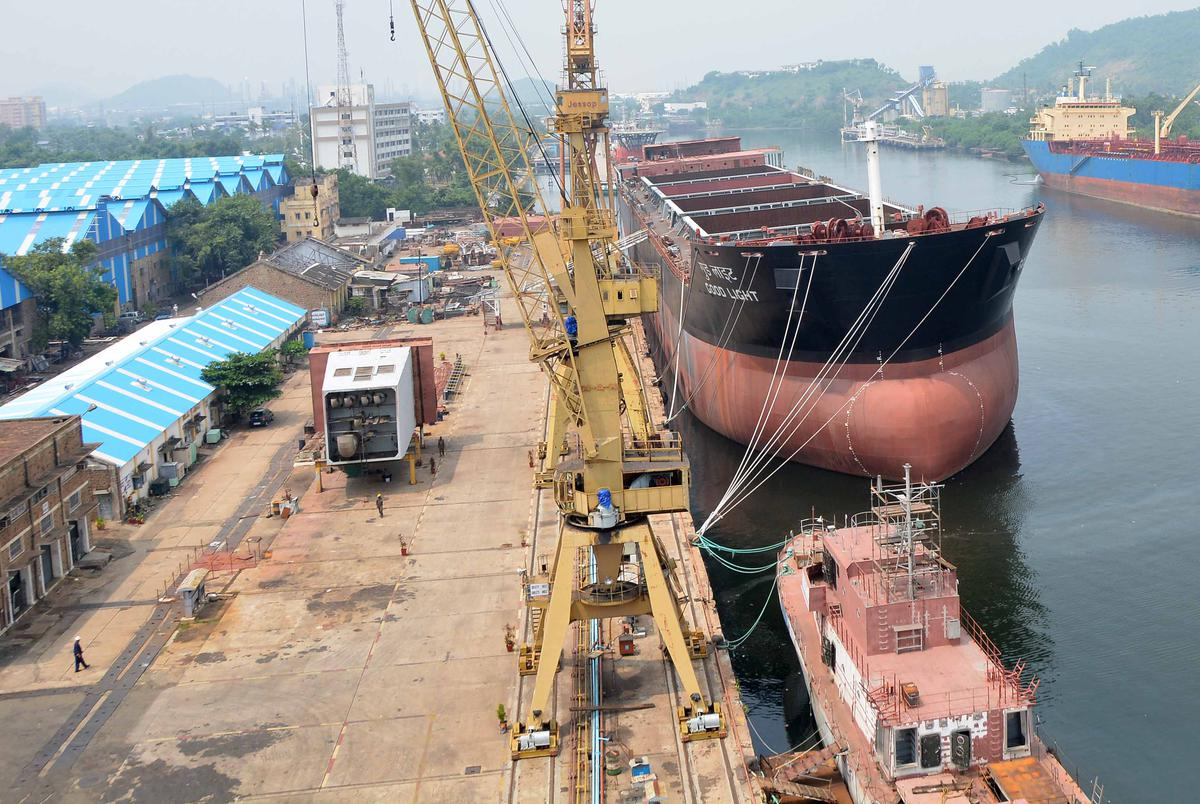
India’s stationary course in the shipping value chain
- The Yangtze River, symbolising China's rich history and modern prosperity, serves as a crucial lifeline for the nation.
- In contrast, India's maritime sector faces challenges and missed opportunities, hindering its growth and global presence.
Historical Perspective
- The Yangtze, integral to China's tradition, myth, and commerce, remains vibrant with modern engineering, symbolised by the Three Gorges project.
- India's maritime history, once promising, has seen a decline in shipbuilding, ownership, and global market share.
Current Scenario
- The Yangtze witnesses a dynamic maritime landscape with massive merchant ships transporting raw materials and finished products.
- China's strategic focus on shipbuilding has propelled it to produce half of the world's ships by 2020, emphasising state-owned government yards.
India's Comparative Analysis
- India, historically ahead of China in maritime endeavours until the late 1980s, had a tradition of ship-owning and a skilled seafaring population.
- The shift in global shipping from qualified Eastern Europeans to English-speaking Indian seafarers showcased India's potential in the industry.
- India's focus on labour supply and seafarer population expansion has been a primary growth driver, contributing an estimated $6 billion in foreign exchange annually.
- Despite success in seafaring and ship management, ship owning, chartering, financing and building have remained elusive for India, limiting its progress up the shipping value chain.
Government Initiatives and Missed Opportunities
- The government's Maritime Agenda 2020 aimed to increase India’s share of global shipbuilding from less than 2% to a modest 5% in a decade.
- However by 2020, India’s share in global shipbuilding had dropped to nearly zero.
- The government's Maritime India Vision 2030 lacks a clear plan for shipbuilding and owning, missing a crucial aspect of India's maritime potential.
Way Forward
- Shipbuilding and owning could elevate India's position in the global maritime industry and enhance its influence in international trade.
- A strong naval base, supported by shipbuilding, is integral to overall military might and strategic power.