

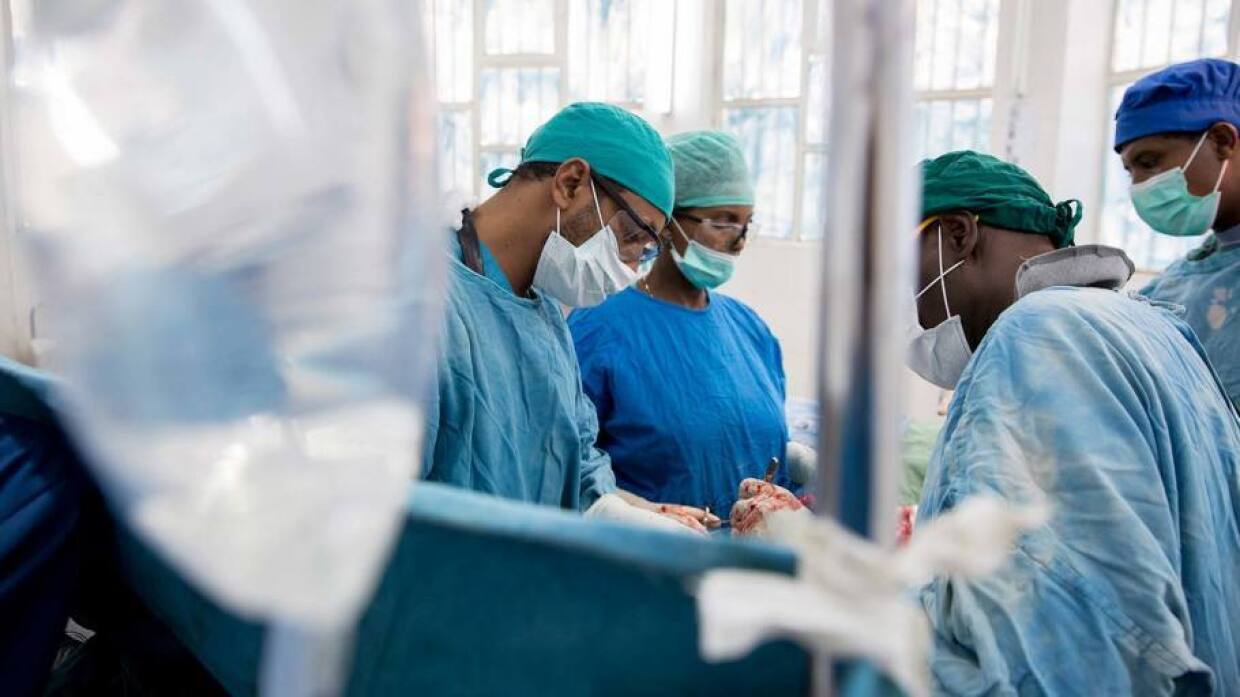
Global surgery: why access to essential surgery is important
- Global surgery, especially in South Asia, where the largest population worldwide lacks access to crucial surgical services, has been significantly overlooked.
Global Surgery
- Global surgery focuses on equitable access to emergency and essential surgery.
- These “surgeries” include essential and emergency surgeries such as surgery, obstetrics, trauma, and anaesthesia (SOTA).
- While it predominantly focuses on low- and middle-income countries (LMICs), it also prioritises access disparities and under-served populations in high-income countries (HICs).
Historical Perspective
- The year 2015, can be considered the “Annus Mirabilis” or the miracle year for global surgery.
- It was marked by the Disease Control Priorities Network (DCPN) report and The Lancet Commission on Global Surgery (LCoGS).
- The Disease Control Priorities Network (DCPN) report on essential surgery was sponsored by the World Bank.
- Key Highlights
- Emergency and essential surgical care is cost-effective
- Scaling up surgical systems is cost-beneficial
- There is a large disease burden that is surgically avertable
- Key Highlights
- The Lancet Commission on Global Surgery (LCoGS) brought together experts and stakeholders.
- Objectives
- Examine the status of surgical care access around the world
- Ideate the indicators for monitoring surgical care preparedness, systemic capacity and impact
- Develop implementable strategies such as the national surgical, obstetrics, and anaesthesia plan (NSOAP).
- Objectives
- The World Health Organization Declaration on Safe Surgery (WHO Resolution 68.15) followed.
- It recognized the necessity of emergency and essential surgical systems for universal health coverage.
Magnitude of the Problem
- Over 70% of the global population lacks timely access to safe and affordable surgical care, with 99% and 96% facing access gaps in low- and lower-middle-income countries.
- South Asia bears a significant burden, with over 98% lacking access to essential surgical care.
- Surgically treatable conditions accounted for 17 million deaths in 2010, surpassing the combined mortality burden of HIV/AIDS, tuberculosis, and malaria - emphasising the need for improved access.
- Lack of access contributes to an economic burden, with projected losses to GDP and societal welfare.
- The cumulative projected loss to GDP due to the absence of scale-up of surgical care is estimated to be $20.7 trillion (in PPP terms) across 128 countries by 2030.
- The annual loss in societal welfare was about $14.5 trillion for 175 countries.
The Issues and Challenges
- Global surgery receives minimal attention in international and national policies, as indicated by a lack of indicators in major health reports.
- The LCoGS noted that surgery contributed to <1% of all indicators mentioned in the World Bank, WHO, UNICEF, and other reports.
- National Health Strategic Plans in African countries and policymaking in India demonstrate limited attention to surgery.
- Funding for surgery is also neglected, with minimal contributions compared to other health areas.
- Research in global surgery is limited, with few publications compared to broader global health research.
Current Scenario and the Solutions
- Work from LCoGS and DCPN depict that emergency and essential surgical care is cost-effective and cost-beneficial.
- Several LMICs, including India, have subnational data on surgical care indicators.
- African countries have implemented National Surgical, Obstetrics, and Anaesthesia Plans (NSOAPs), showcasing political commitment.
- South Asian countries like Pakistan and Nepal have initiated similar plans, and India's Pradhan Mantri Jan Arogya Yojana provides surgeries at minimal cost.
- Research, policy focus, and sustained financing are identified as key elements to address global surgery challenges.