| Aspect | Details |
|---|---|
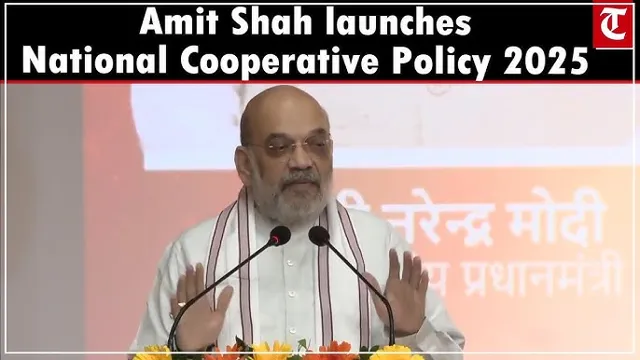
| Event | Union Home Minister and Minister of Cooperation Shri Amit Shah unveiled the National Cooperation Policy - 2025 in New Delhi. |
| Objective | To redefine and revitalize India's cooperative movement, aiming for 'Sahkar Se Samriddhi' (Prosperity through Cooperation) and making it a vital engine of national economic and social development by 2047. |
| Background | India's first National Cooperative Policy was introduced in 2002 under Atal Bihari Vajpayee. The Ministry of Cooperation was formed in 2021, and a 40-member drafting committee led by Shri Suresh Prabhu prepared the new policy. |
| Significance | Aims to triple the cooperative sector's contribution to GDP by 2034, bring 50 crore citizens into active participation, create employment, bridge the rural-urban divide, and empower marginalized groups. |
| Key Objectives | Inclusive development, employment generation, sectoral expansion (e.g., tourism, taxi services, insurance), institutional strengthening, and widespread coverage (one cooperative per village). |
| Key Features | Grassroots empowerment (one cooperative per panchayat), youth-centric and tech-enabled cooperatives (e.g., Sahkar Taxi, Tribhuvan Sahkari University), sectoral diversification, robust monitoring, and institutional support. |
| Institutional Support | Establishment of National Cooperative Exports Limited, equal treatment for scheduled cooperative banks, and promotion of "Cooperation Amongst Cooperatives". |
| Legislation | Legal amendments every 10 years to maintain policy relevance, with 83 intervention points identified (58 completed, 3 fully implemented, others in progress). |

Workflow
Login
Contact Counsellor