

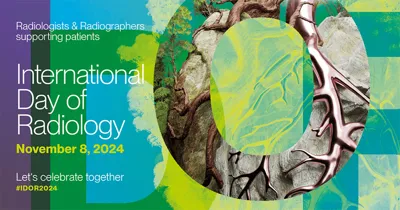
World Radiology Day 2024: Celebrating the Legacy of X-Rays
| Aspect | Details |
|---|---|
| Event | World Radiology Day |
| Date | November 8 |
| Purpose | Honours Wilhelm Conrad Rontgen's discovery of X-rays in 1895 and highlights the role of radiology in healthcare. |
| Historical Significance | Wilhelm Conrad Rontgen discovered X-rays in 1895, earning the first Nobel Prize in Physics in 1901. The first radiographic image was of his wife's hand. |
| First Surgical Use | John Hall-Edwards conducted the first surgical procedure using X-rays in 1896. |
| War-Time Role | X-rays were instrumental in locating bullets and treating soldiers during late 19th and early 20th-century wars. |
| Theme 2024 | "Radiographers: Seeing the Unseen" |
| Radiographers' Role | Radiographers capture and interpret radiographic images, crucial for diagnosing conditions like broken bones, tumors, and other abnormalities. |
| Science of X-Rays | X-rays are electromagnetic radiation with higher energy levels, allowing them to penetrate tissues and create internal images. |
| Radiography Process | X-rays pass through the body, absorbed differently by tissues, and captured on detectors to form detailed images. |
| Applications in Healthcare | Radiology is used for accurate diagnosis, minimally invasive procedures, monitoring disease progression, emergency care, medical research, and patient education. |
| Future of Radiology | Advancements in AI, machine learning, robot-assisted imaging, predictive diagnostics, and personalized treatment are shaping the future of radiology. |
| First Celebrated | 2012 |
| Edition (2024) | 13th Edition |