

Why 2023 was the warmest year on record, and what happens now
- Europe’s Copernicus Climate Change Service (C3S) recently stated that 2023 was the warmest year since records began in 1850.
- 2023 recorded a 1.48 °C increase from the pre-industrial level, surpassing the previous record of 2016.
- It also mentioned that temperatures in 2023 likely exceeded those of any year-long period in at least the last 100,000 years.
Extreme Weather Events
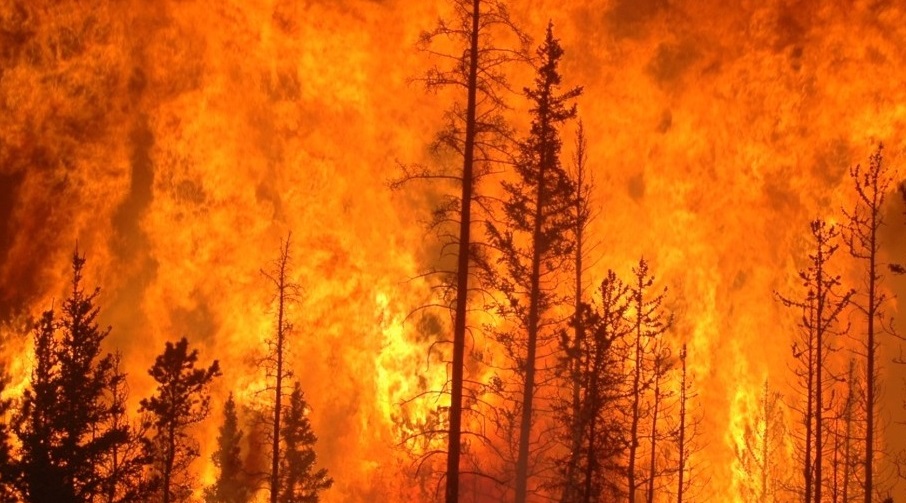
- Rising temperatures contributed to global extreme events in 2023 like heatwaves, floods, droughts and wildfires.
- Canada faced its most destructive wildfire season on record, with over 45 million acres burned.
Unprecedented Records
- Every day in 2023 exceeded 1°C above the pre-industrial level.
- Around 50% of days were over 1.5°C warmer, with two days in November exceeding 2°C.
- However, it does not mean that the planet has breached the 1.5 and 2°C thresholds set by the 2015 Paris Agreement.
Notable Climate Shifts
- The global daily average sea surface temperature (SST) also increased.
- According to Climate Reanalyzer, since mid-March 2023, the daily average SST has been the highest ever, leading to marine heatwaves in various regions.
- Climate Reanalyzer is a website which provides visualisations of publicly available datasets and models.
- Antarctic sea ice extent hit a new low in September, reaching 16.96 million sq km, 1.03 million sq km less than the previous record set in 1986.
Causes of Extreme Warming
- The main driver behind the extreme warming is the increasing greenhouse gas concentrations in the atmosphere, including carbon dioxide and methane.
- Human activities, especially fossil fuel burning, released unprecedented levels of greenhouse gases.
- According to C3S and the Copernicus Atmosphere Monitoring Service (CAMS), in 2023, greenhouse gas concentrations reached the highest levels ever recorded in the atmosphere.
- In 2023, carbon dioxide concentrations increased by 2.4 ppm, while methane concentrations rose by 11 ppb compared to 2022.
- El Nino's onset in 2023 also contributed to extreme warming.
- El Nino refers to an abnormal warming of surface waters in the equatorial Pacific Ocean.
Outlook for 2024
- Scientists predict that 2024 could be even warmer than 2023.
- Also, El Nino's delayed onset in 2023 suggests it might not have been the primary driver, making 2024 potentially hotter.
- WMO’s State of Global Climate Report, 2023
- There is a 66% chance that at least one of the years between 2023 and 2027 could breach the 1.5°C warming threshold.
- Long-term breach of the 1.5 degree limit could lead to severe climate change impacts, necessitating urgent global action on emission cuts.