

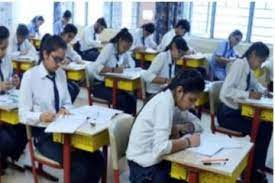
What's in Bill to stop cheating in job exams
- The Public Examinations (Prevention of Unfair Means) Bill, 2024 was recently introduced in the Lok Sabha.
- Objective: To ensure fairness, transparency, and credibility in public examinations by preventing the use of unfair means.
Defining "Unfair Means" and “Public Examinations”
- Section 3 of the Bill outlines at least 15 actions constituting unfair means in public examinations “for monetary or wrongful gain”.
- These include question paper leaks, tampering with answer sheets, directly or indirectly assisting the candidate etc.
- Under Section 2(k), a “public examination” is defined as any examination conducted by
- A “public examination authority” listed in the Schedule of the Bill
- Any “such other authority as may be notified by the Central Government”.
Punishments for Violations
- Section 9 of the Bill states that all offences under the Bill are cognizable, non-bailable, and non-compoundable.
- The penalties include imprisonment up to five years, fines up to Rs 10 lakh, and additional sanctions for failure to pay fines.
- A service provider who is engaged to provide “support of any computer resource or any material” for the conduct of the examination can be fined up to Rs 1 crore, along with other penalties.
- Organised paper leaks are subject to more severe penalties, with imprisonment ranging from five to ten years and fines starting from Rs 1 crore.
Reasons for the Bill
- The prevalence of question paper leaks in recruitment exams prompted the need for comprehensive legislation to address malpractices and ensure the integrity of public examinations.
- The objective of the Bill is to bring greater transparency, fairness and credibility to the public examination systems.
- It aims to deter individuals and groups exploiting vulnerabilities for wrongful gains.
- It clarifies that candidates will not be held liable under the Bill but remain subject to existing administrative provisions of examination authorities.
- Once enacted, the Bill will serve as a model for states to adopt, aiding in preventing criminal disruptions in state-level public examinations.