

Viability gap funding for tapping off-shore wind leads green push
- Recently, the Finance Minister unveiled a significant move to tap into the untapped potential of off-shore wind energy.
Off-Shore Wind Energy Boost
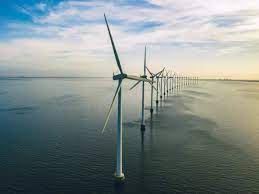
- Off-shore wind turbines, situated in the middle of the sea for optimal wind exposure, promise higher conversion rates of wind energy to electricity.
- Despite higher construction and maintenance costs, the government aims to offset these by encouraging large-scale systems.
Current Landscape and Future Prospects
- India presently lacks off-shore wind projects, but potential sites, particularly off the coasts of Gujarat and Tamil Nadu, have been identified.
- The announcement includes viability gap funding to facilitate the establishment of at least one gigawatt of off-shore wind energy capacity.
- It acts as a financial incentive to attract investors, signalling the government's commitment to advancing clean energy technologies.
Budget's Green Initiatives
- Off-Shore Wind Viability Gap Funding: Intended to facilitate the establishment of off-shore wind farms, lowering entry barriers for investors.
- Rooftop Solar Incentives: Households installing rooftop solar systems will receive 300 units of free electricity every month, aiming to encourage widespread adoption.
- Electric Vehicle (EV) Ecosystem Support: The government plans to support expanding manufacturing and charging infrastructure for electric vehicles.
- Compressed Biogas Blending: Mandatory blending of compressed biogas in CNG and PNG in a phased manne. Financial aid for biomass collection from various sources was announced to boost electricity generation through biomass.
- Biomass Aggregation Machinery Support: Financial assistance will be provided for biomass aggregation machinery, enhancing biomass collection for increased biofuel production.
Coal Gasification and Liquefaction
- The Finance Minister also revealed plans to establish 100 million tonnes of coal gasification and liquefaction capacity by 2030.
- Objective: To reduce dependence on imported liquid or gaseous fuels like natural gas, methanol, and ammonia.
- While these processes do not inherently make coal a cleaner energy source, they aim to enhance India's energy security by minimizing reliance on external fuel sources.
- Critics argue that the budget falls short in providing sufficient support for clean energy solutions.
Prelims Takeaway
- Coal Gasification and Liquefaction
- Off-Shore Wind Energy
- Renewable Energy
- Electric Vehicles