| Aspect | Details |
|---|---|
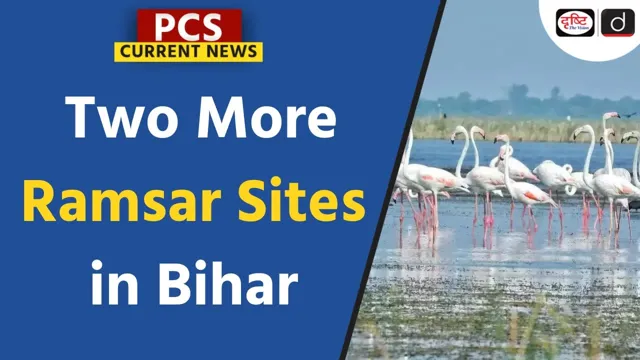
| Event | Two Wetlands in Bihar Designated as Ramsar Sites |
| Wetlands Added | Gokul Jalashay (Buxar District) and Udaipur Jheel (West Champaran District) |
| Total Ramsar Sites in India | 93 sites, covering 13,60,719 hectares |
| India's Global Rank | Top in Asia, third globally after UK (176) and Mexico (144) |
| Gokul Jalashay | Type: Oxbow lake near river Ganga; Role: Flood buffer, habitat for 50+ bird species; Livelihood: Fishing, farming, irrigation; Tradition: Annual cleaning during festival |
| Udaipur Jheel | Type: Oxbow lake surrounding a village; Biodiversity: 280 plant species (including Alysicarpus roxburghianus); Migratory Birds: Wintering ground for 35 species, including vulnerable common pochard |
| Wetlands Definition | Areas of marsh, fen, peatland, or water (natural or artificial) with static/flowing water; marine areas (depth ≤ 6m); transitional ecosystems |
| Ramsar Convention | Adopted in 1971 in Ramsar, Iran; India joined in 1982; Focus on wetland conservation and wise use |
| Montreux Record | Lists wetlands with deteriorating ecological character; India has two sites: |
| Keoladeo National Park (Rajasthan, 1990) - UNESCO World Heritage Site | |
| Loktak Lake (Manipur, 1993) - Largest freshwater lake in Northeast India, known for Phumdis (floating vegetation) | |
| Chilika Lake | Included in Montreux Record in 1993, removed in 2002 (first site from Asia to be removed) |

Workflow
Login
Contact Counsellor