

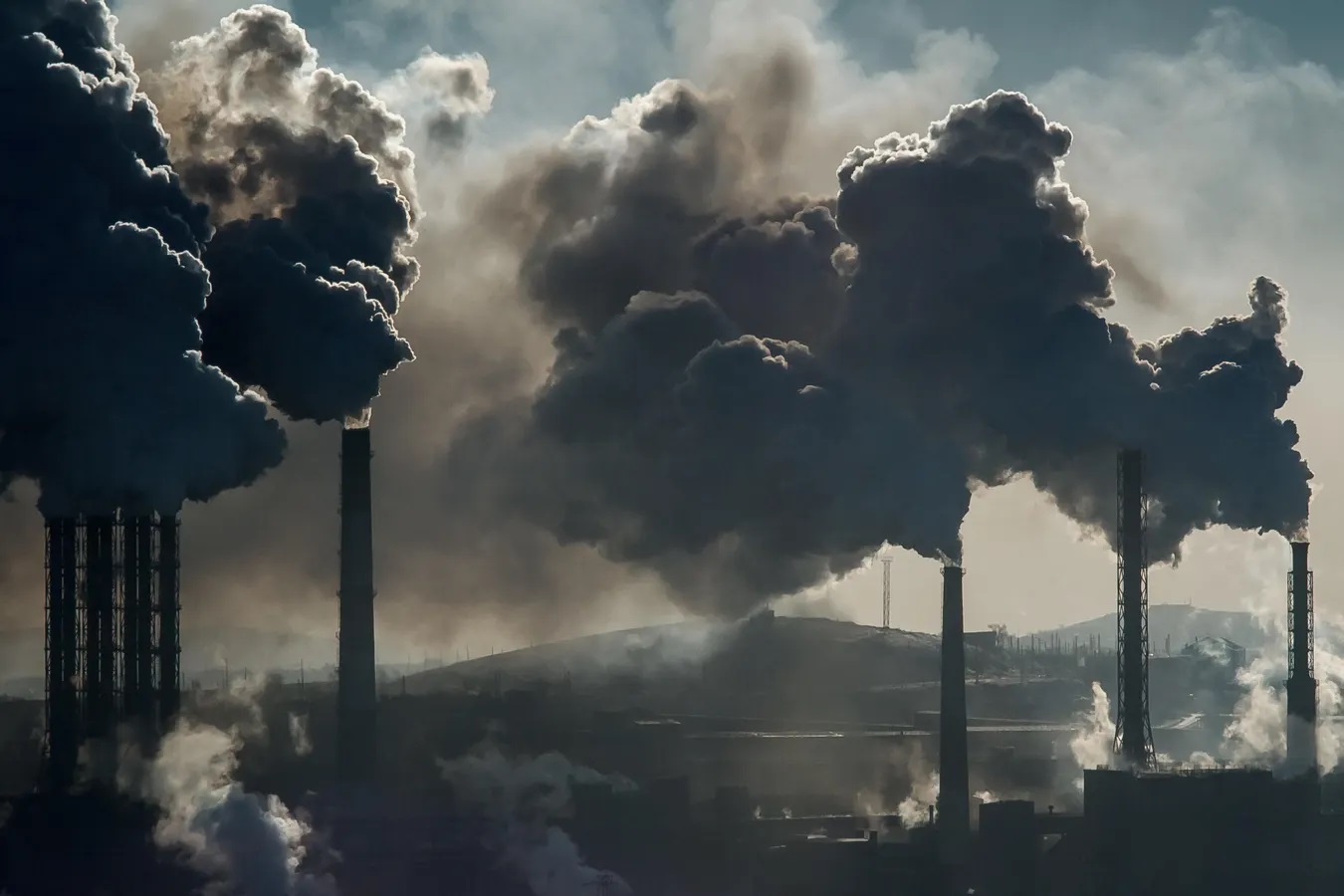
The need to curb black carbon emissions
- At the COP26 climate talks in Glasgow in November 2021, India pledged to achieve net-zero emissions by 2070, positioning itself as a frontrunner in the race to carbon neutrality.
- According to the Ministry of New and Renewable Energy, India had installed a renewable energy capacity of over 180 GW by 2023 and is expected to meet its target of 500 GW by 2030.
- While carbon dioxide mitigation strategies will yield benefits in the long term, they need to go hand-in-hand with efforts that provide short-term relief.
Why is black carbon relevant?
- Black carbon is the dark, sooty material emitted alongside other pollutants when biomass and fossil fuels are not fully combusted.
- It contributes to global warming and poses severe risks.
- Studies have found a direct link between exposure to black carbon and a higher risk of heart disease, birth complications, and premature death.
- According to a 2016 study, the residential sector contributes 47% of India’s total black carbon emissions.
- Industries contribute a further 22%, diesel vehicles 17%, open burning 12%, and other sources 2%.
- Decarbonisation efforts in the industry and transport sectors in the past decade have yielded reductions in black carbon emissions, but the residential sector remains a challenge.
Has PMUY helped?
- In May 2016, the Government of India said the Pradhan Mantri Ujjwala Yojana (PMUY) would provide free liquefied petroleum gas (LPG) connections to households below the poverty line.
- The primary objective was to make clean cooking fuel available to rural and poor households and reduce their dependence on traditional cooking fuels.
- The PMUY has established infrastructure to go with LPG connections, including free gas stoves, deposits for LPG cylinders, and a distribution network.
- The programme has thus, been able to play a vital role in reducing black carbon emissions, as it offers a cleaner alternative to traditional fuel consumption.
- However, in 2022-2023, 25% of all PMUY beneficiaries — 2.69 crore people — availed either zero LPG refill or only one LPG refill, according to RTI data, meaning they still relied entirely on traditional biomass for cooking.
What is the government’s role?
- The key to enhancing the quality of life in these areas lies primarily in securing access to clean cooking fuels.
- While the future holds the promise of meeting energy needs in rural areas through renewable sources, the immediate benefits for rural communities are poised to come from using LPG.
- Another big hurdle to the PMUY’s success is the lack of last-mile connectivity in the LPG distribution network, resulting in remote rural areas depending mostly on biomass.
- One potential solution to this issue is the local production of coal-bed methane (CBM) gas by composting biomass.
- CBM is a much cleaner fuel with lower black-carbon emissions and investment.
- Panchayats can take the initiative to produce CBM gas locally at the village level, ensuring every rural household can access clean cooking fuel.
Conclusion
- As India navigates its responsibilities on the global stage towards long-term decarbonisation, there is an urgent need to act.
- Recent estimates have indicated that mitigating residential emissions will avoid more than 6.1 lakh deaths per year from indoor exposure to air pollution.