

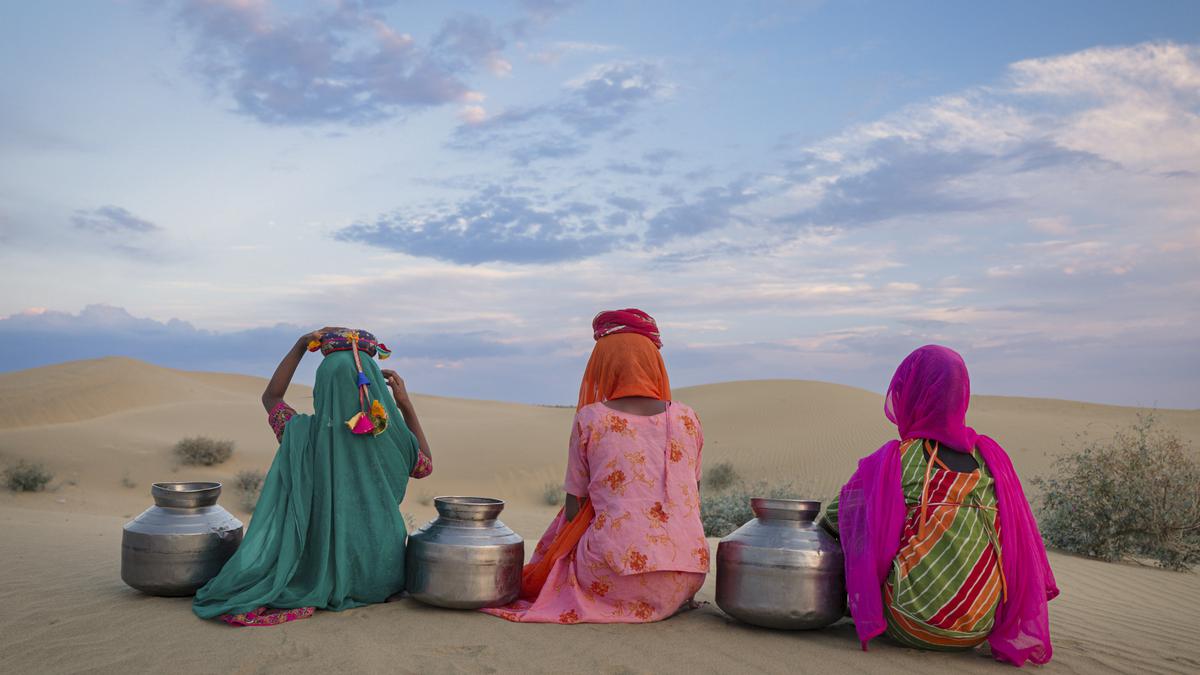
The climate crisis is not gender neutral
- The climate crisis is already here and does not impact everyone equally.
- Women and girls experience disproportionately high health risks, especially in situations of poverty, and due to existing roles, responsibilities and cultural norms.
Key highlights
- According to the United Nations Development Programme (UNDP), women and children are 14 times more likely than men to die in a disaster.
- The Supreme Court of India has just ruled that people have a right to be free from the adverse effects of climate change,
- the right to a clean environment is already recognised as a fundamental right within the ambit of the right to life.
Climate affect women
- Climate-driven crop yield reductions increase food insecurity, adversely impacting poor households that already suffer higher nutritional deficiencies.
- Within small and marginal landholding households, while men face social stigma due to unpaid loans (leading to migration, emotional distress, and sometimes even suicide),
- women experience higher domestic work burdens, worse health, and greater intimate partner violence.
- National Family Health Survey (NFHS) 4 and 5 data showed that women living in drought-prone districts were more underweight
- experienced more intimate partner violence and had a higher prevalence of girl marriages.
- but also impact their mental health and emotional well-being.
Extreme events and gender-based violence
- A report from the Council on Energy, Environment and Water (CEEW) in 2021 found that 75% of Indian districts are vulnerable to hydromet disasters (floods, droughts and cyclones).
- NFHS 5 data showed that over half of women and children living in these districts were at risk.
Why does climate action need women?
- when provided with the same access to resources as men, women increased their agricultural yields by 20% to 30%.
- Tribal and rural women, in particular, have been at the forefront of environmental conservation.
- Giving women and women collectives (Self-help Groups and Farmer Producer Organisations) the knowledge, tools and access to resources would encourage local solutions to emerge.
What need to be done
- Urban local bodies, municipal corporations and district authorities in all vulnerable districts need to have a plan and provide training and resources to key implementers.
- urban planning to improve tree cover, minimising concrete, increasing green-blue spaces and designing housing that is better able to withstand heat are longer-term actions.
- Devolution of powers and finances and investing in building the capacity of panchayat
Case study
- The Mahila Housing Trust in Udaipur showed that painting the roofs of low-income houses with reflective white paint reduced indoor temperatures by 3° C to 4° C and improved quality of life.
CONCLUSION
- The National Action Plan on Climate Change (NAPCC) and State Action Plan on Climate Change (SAPCC) highlight the impacts on women,
- Recommendations for the ongoing revision of SAPCCs lay stress on the need to move beyond stereotypes, recognise the vulnerabilities of all genders
- implement gender-transformative strategies, ensuring a comprehensive and equitable approach to climate adaptation.
- Instead of being labelled as victims, women can lead the way in climate action.