

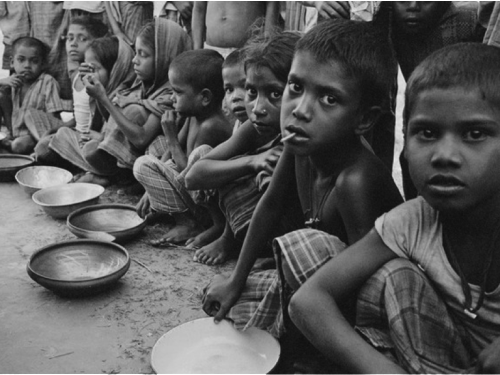
THE BURDEN OF MALNUTRITION
- The need for a balanced diet has become a challenge in India.
- Malnutrition has given rise to various diseases, which in turn has exaggerated the malnutrition problem.
Malnutrition and health disorder: A Two-way Relationship
- There is a two-way relationship between nutritional deficiencies and disorders.
- Consistent intake of food lacking in essential micronutrients can lead to iron deficiency anaemia and Vitamin A, and zinc deficiency, and impair immunity.
- Conversely, conditions such as celiac disease and infections like worm infestations can disturb the digestive system, leading to nutrient deficiencies.
Government Programs and Challenges
- Government programmes like Anaemia Mukt Bharat (AMB) are among the biggest targeted measures to tackle the disorder.
- It involves administering iron and folic acid (IFA) tablets and other prophylactic measures to address anaemia.
- The Mid-day Meal Scheme for school children is another such intervention.
- However, challenges in the effective implementation of such programs exist, despite their targeted nature.
Role of Diet in Addressing Malnutrition
- The burden of malnutrition is complex and needs to be addressed through multiple interventions with diet playing a significant role.
- A comparison between traditional and contemporary dietary patterns underscore a transition from diverse, well-balanced diets to processed, nutritionally lacking alternatives.
- Recognizing the role of reducing processed food consumption for better health outcomes is crucial.
Challenges in Access to a Balanced Diet
- According to FAO data, 46% of South Asia's population lacks access to an affordable balanced diet.
- The State of Food Security and Nutrition in the World, 2023
- Around 74% of India's population could not afford a healthy diet, and 39% fell short of a nutrient-adequate diet.
Large-Scale Food Fortification (LSFF)
- Recent government interventions, particularly LSFF, is a timely strategy to enhance ongoing efforts.
- LSFF, aligned with micronutrient supplementation programs and behavioural change measures has immense potential to improve the efficacy of existing initiatives.
- Fortification in India is not a completely novel strategy.
- The adoption of iodised salt under the National lodine Deficiency Disorders Control Programme in 1992 significantly reduced goitre rates.
- India’s food fortification programme now includes adding micronutrients to staples such as wheat flour, rice, edible oils and salt.
Awareness for Fortified Food
- Awareness, particularly dispelling misconceptions regarding fortified foods, is critical for the acceptance of fortified foods among the targeted beneficiaries.
- Information, Education, and Communication (IEC) campaigns are crucial in addressing concerns related to the appearance and texture of fortified foods.
- An important step is to inform the beneficiaries about the stringent standards of fortification to build trust.
Conclusion
- Government initiatives aimed at strengthening staple foods should be complemented by efforts to promote balanced diets.
- The focus should extend beyond adopting healthier eating habits at the individual and community levels; it should also involve state-level strategies, such as the LSFF).