

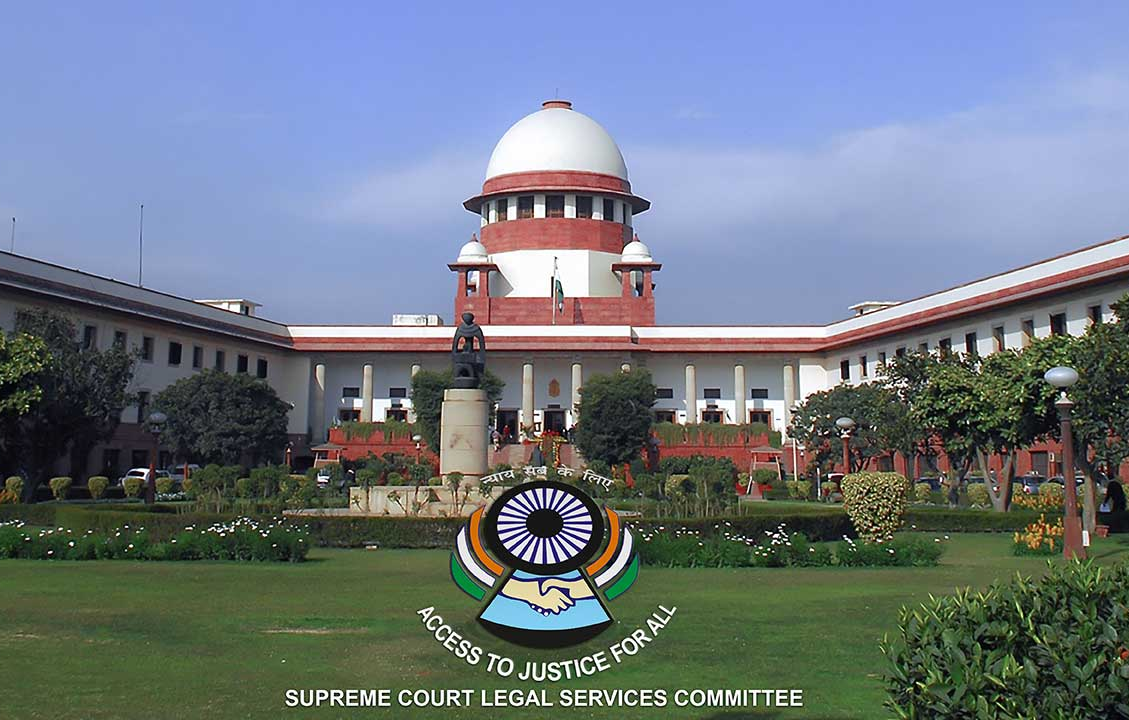
SUPREME COURT LEGAL SERVICES COMMITTEE
- Justice BR Gavai was recently nominated as the new Chairman of the Supreme Court Legal Services Committee (SCLSC).
Supreme Court Legal Services Committee (SCLSC)
- The SCLSC operates under Section 3A of the Legal Services Authorities Act, 1987.
- Objective: To provide free and competent legal services to the weaker sections of society within the jurisdiction of the Supreme Court.
- The Committee is constituted by the Central Authority (NALSA).
- Under Section 27 of the 1987 Act, the Centre is empowered to make rules in consultation with the CJI, by notification, to carry out the provisions of the Act.
Composition of SCLSC
- As of now, SCLSC comprises a Chairman and nine members nominated by the CJI.
- Rule 10 of NALSA Rules, 1995, outlines the criteria for members' strength, experience and qualifications.
- The CJI nominates both the chairman and other members, with the authority to appoint the Secretary to the Committee.
- The Committee can also appoint officers and other employees as prescribed by the Centre, in consultation with the CJI.
Need for Legal Services
- Article 39A of the Indian Constitution, emphasises the state's duty to promote justice and provide free legal aid, ensuring equal opportunity.
- Articles 14 (right to equality) and 22(1) (rights to be informed of grounds for arrest) also make it obligatory for the State to ensure
- Equality before the law
- A legal system that promotes justice based on equal opportunity
- The idea of legal aid programs was proposed in the 1950s, and a national committee under Justice PN Bhagwati was established in 1980 to monitor legal aid activities.
Legal Services Authorities Act
- Enacted in 1987, the Act provides a statutory foundation for legal aid programs, aiming to offer free and competent legal services to eligible groups.
- These include women, children, SC/ST and EWS categories, industrial workers, disabled persons and others.
- NALSA, established in 1995, monitors and evaluates legal aid implementation, laying down policies for availability.
- State Legal Services Authorities (SLSA), District Legal Services Authorities (DLSAs) and Taluk Legal Services Committees form a nationwide network to implement legal aid programs.
- It also disburses funds and grants to State Legal Services Authorities and NGOs for implementing legal aid schemes and programmes.
Hierarchy of Legal Service Authorities
- SLSAs, headed by the Chief Justice of the respective High Court, implement NALSA's policies, give free legal services to people and conduct Lok Adalats.
- DLSAs, chaired by District Judges, operate in districts, providing various legal services.
- Taluk Legal Services Committees, led by senior civil judges, function in taluks, organising legal awareness camps, offering free legal services, supplying and obtaining certified order copies and other legal documents etc.