

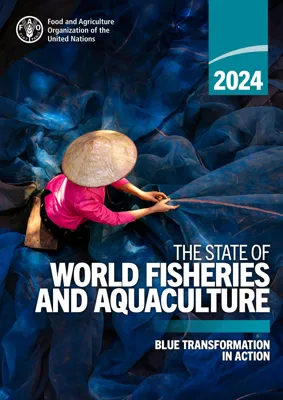
The State of World Fisheries and Aquaculture 2024: Key Insights and Trends
| Aspect | Details |
|---|---|
| Report Title | The State of World Fisheries and Aquaculture 2024 |
| Released By | Food and Agriculture Organization (FAO) of the United Nations |
| Key Highlight | Aquaculture production exceeded fisheries for the first time in 2022 |
| Aquaculture Production | 94.4 million tons (51% of total aquatic animal production, 57% for human consumption) |
| Global Trade Value | $195 billion in 2022 (19% increase from pre-pandemic levels) |
| Projected Growth | Aquatic animal production expected to increase by 10% by 2032 |
| Challenges | Climate change, water scarcity, pollution, biodiversity loss, and other man-made impacts |
| Key Messages | 1. World fisheries and aquaculture production hit a new high in 2022. |
| 2. Aquaculture can meet rising global demand for aquatic foods. | |
| 3. Global capture fisheries remain stable but sustainability is a concern. | |
| 4. Global demand for aquatic foods is projected to increase further. | |
| 5. Aquatic animal production expected to increase by 10% by 2032. | |
| 6. Small-scale fisheries are vital for nutrition and livelihoods. | |
| 7. Improved data collection and analysis are essential for effective management. | |
| 8. Urgent action needed to achieve Sustainable Development Goal targets related to fisheries. | |
| Sustainable Roadmap | Blue Transformation Roadmap aims to ensure sustainable fisheries and aquaculture growth. |