

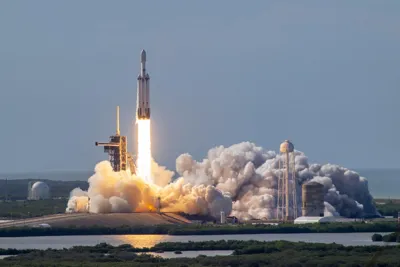
SpaceX Launches NOAA's Final Satellite: GOES-U Enhances Weather and Space Monitoring
| Aspect | Details |
|---|---|
| Launch Details | GOES-U launched on June 25, 2024 from NASA's Kennedy Space Center in Florida aboard a SpaceX Falcon Heavy rocket at 5:26 PM. |
| Deployment | Achieved geostationary orbit at 22,200 miles above Earth by 10:18 PM. Deployed solar arrays and will be renamed GOES-19 after settling. |
| Replacement | Replaces the previous satellite, GOES-T, in the NOAA program. |
| Primary Function | Provides continuous weather monitoring across the Western Hemisphere, including North America, Central and South America, the Caribbean, the Atlantic Ocean, and West Africa. |
| Key Technology | Equipped with Compact Coronagraph-1 (CCOR-1), enhancing solar flare and coronal mass ejection monitoring. |
| Monitoring Frequency | Improves solar flare monitoring from eight-hour intervals to every 30 minutes. |
| Applications | Supports real-time weather tracking, severe weather preparedness, fire detection, and climate monitoring. |
| Key Statements | NASA Administrator Bill Nelson: Emphasized role in mitigating severe weather impacts. Elsayed Talaat (NOAA): Highlighted CCOR-1's potential for improved solar event forecasts. Nicky Fox (NASA HQ): Noted applications in disaster preparedness and climate monitoring. |
| Future Benefits | Enhances early warnings for solar disturbances and improves disaster resilience. |