

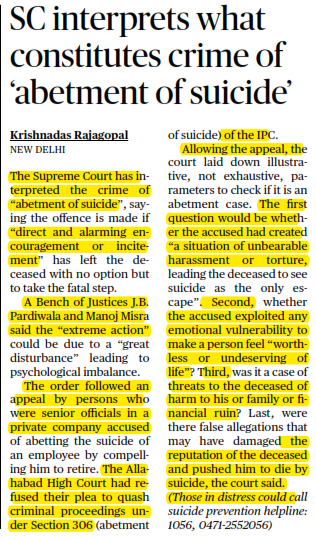
SC interprets what constitutes crime of 'abetment of suicide'
- The Supreme Court has interpreted the crime of ‘abetment of suicide’, saying the offence is made if the accused’s “direct and alarming encouragement or incitement” left the deceased with no other option but to take the fatal step.
Highlights:
- The Supreme Court of India has clarified the interpretation of abetment of suicide, asserting that the offence occurs when the accused’s “direct and alarming encouragement or incitement” leaves the deceased with no other option but to take their own life.
- This ruling came from a Bench of Justices J.B. Pardiwala and Manoj Misra, highlighting the psychological disturbance often behind the extreme action of suicide.
Case Background:
- The judgment followed an appeal by senior officials of a private company, accused of abetting an employee’s suicide. The employee allegedly took his life after being compelled to retire during a company meeting in 2006.
- The Allahabad High Court had refused to quash the criminal proceedings against the officials under Section 306 of the Indian Penal Code (IPC), which deals with abetment of suicide.
- This section has since been replaced by Section 108 of the Bharatiya Nyaya Sanhita, but the offence and its punishment—up to 10 years’ imprisonment and a fine—remain unchanged.
Categories of Incitement:
- The court outlined two broad categories under which incitement to suicide may occur:
- Sentimental Ties: These may involve personal relationships, where quarrels or emotional stress could cause psychological imbalance, leading to suicide.
- Official Relationships: In this category, the connection between the accused and the deceased is professional, with obligations dictated by rules, policies, or laws. Unlike personal relationships, official ties are governed by legal duties rather than emotional expectations.
Parameters for Abetment of Suicide:
- The court set out certain parameters to determine if an act qualifies as abetment of suicide. These include:
- Unbearable Harassment or Torture: Did the accused create a situation where the deceased saw no escape other than suicide?
- Exploiting Emotional Vulnerability: Did the accused manipulate the deceased's emotions, making them feel worthless or undeserving of life?
- Threats of Harm or Financial Ruin: Did the accused threaten the deceased or their family, pushing them toward suicide?
- False Allegations Leading to Public Humiliation: Were baseless accusations made against the deceased, damaging their reputation and driving them to end their life?
Prelims Takeaways:
- Section 108 of the Bharatiya Nyaya Sanhita