

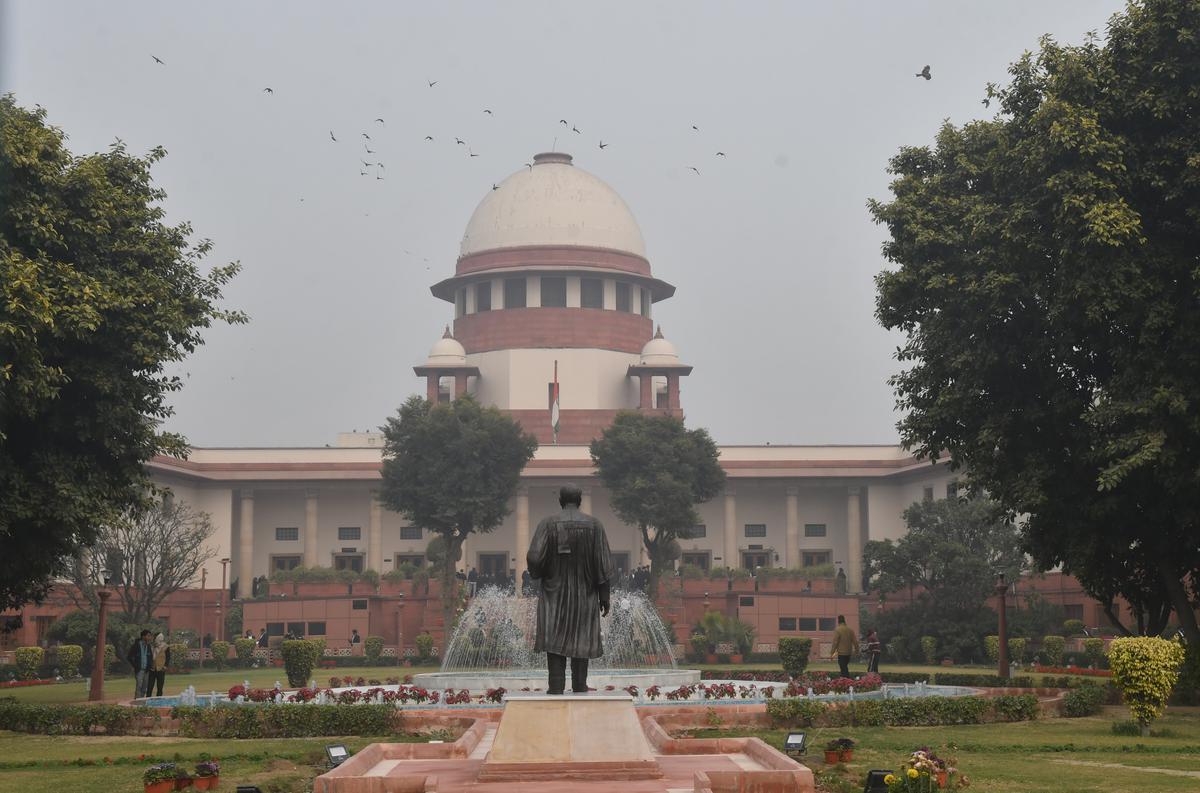
SC declines to take up plea by Indian held in Prague for ‘plot’ to kill Pannun
- The Supreme Court rejected a plea by an Indian national detained in Prague accused of conspiring to murder Khalistani activist Gurpatwant Singh Pannun.
- Justice Sanjiv Khanna emphasized that the matter involves public international law, and it's the government's responsibility to address.
Judicial Respect for International Law
- Justice Khanna stressed the importance of respecting international law and the sovereignty of courts.
- Consular access under the Vienna Convention was acknowledged, with the judge advising the petitioner to approach authorities if denied.
Vienna Convention on Diplomatic Relations
- The Convention was adopted on 14th April 1961 by the United Nations Conference on Diplomatic Intercourse and Immunities held in Vienna, Austria. India has ratified the convention.
- It entered into force on April 24, 1964, and is nearly universally ratified, with Palau and South Sudan being the exceptions.
- It sets out the special rules – privileges and immunities – which enable diplomatic missions to act without fear of coercion or harassment through enforcement of local laws and to communicate securely with their sending Governments.
- It makes provision for:
- Withdrawal of a mission – which may take place on grounds of economic or physical security
- For breach of diplomatic relations which may occur in response to abuse of immunity or severe deterioration in relations between sending and receiving States.
- A “receiving State” refers to the host nation where a diplomatic mission is located.
Prelims Takeaway
- Vienna Convention
- United Nations