

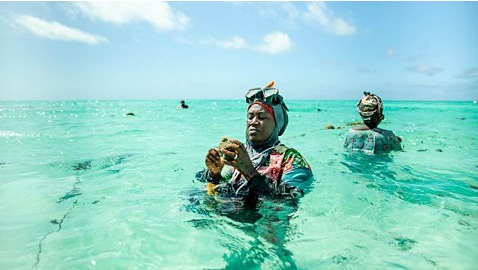
Saved by sponge
- As oceans warm up, women in Zanzibar switch from seaweed to climate-resilient sponge farming to stay afloat.
Sponge
- Sponges, unlike seaweed, possess remarkable resilience to climate change
- They require minimal maintenance, and command premium market prices, according to marine biologist Aziza Said from the University of Dodoma, Tanzania.
- Additionally, sponge farming requires little financial resources and technical expertise, as these organisms grow and propagate naturally.
- Most sponges are hermaphrodites, harbouring both male and female reproductive organs, enabling them to self-propagate effortlessly.
- New sponges emerge from small buds that detach from the parent sponge and begin independent growth.
- Even damaged or fragmented sponges can regenerate into new individuals.
- This remarkable regenerative ability underpins the ease and feasibility of commercial sponge farming.
- Unlike synthetic sponges, sea sponges are free from harmful substances like chemicals and microplastics
Uses
- These sponges are used for bathing and general hygiene
- Their skeletons break down into microscopic pieces of silicon, which helps control the carbon cycle in the ocean and reduces the greenhouse effect.
- Dissolved silicon is critical for the growth of diatoms, tiny organisms which absorb large amounts of CO2 in the ocean using photosynthesis.
Prelims takeaway
- Sponge
- Global warming