

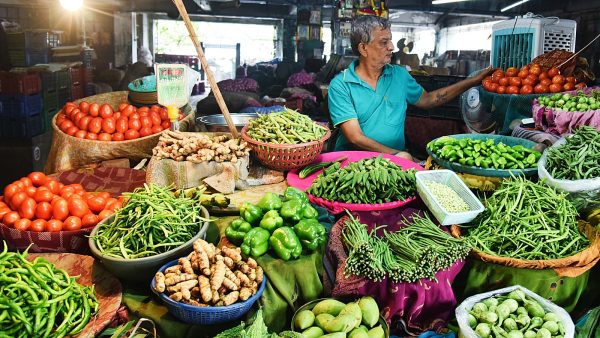
Retail inflation rises to 5.7% in December
- India's retail inflation increased to a four-month high of 5.7% in December 2023, up from 5.55% in the previous month.
- The uptick in December's inflation was driven by the food and beverages segment, particularly vegetables.
- Food prices recorded a national increase of 9.5%, with urban consumers experiencing a rise of 10.42%.
- Urban consumers faced a higher inflation rate of 6%, while rural consumers experienced slightly lower food price hikes but a higher overall inflation rate of nearly 6%.
Inflation
- A long-term increase in the general price level of goods and services in a given economy.
- It considers the pricing of most everyday or standard products and services.
- These include food, clothes, housing, recreation, transportation, consumer staples, etc.
- It is positive when it helps improve consumer demand and consumption, and operate economic growth.
- Even inflation is meant to keep deflation in check and is a drag on the economy.
Inflation Targeting
- It is a central banking policy that focuses on altering monetary policy to attain a set annual inflation rate.
- Assumption: Preserving price stability, which is achieved by managing inflation, is the greatest way to generate long-term economic growth.
- Under the RBI Act, 1934, the Central Government, in consultation with the RBI, determines the inflation target in terms of the Consumer Price Index (CPI), once in five years.
- It provides for the constitution of a six-member Monetary Policy Committee (MPC) to determine the policy rate required to achieve the inflation target.
- Currently, the RBI aims to keep inflation at 4% but will tolerate inflation between the range of 2% to 6%.
Retail Inflation
- Also known as Consumer Price Index (CPI) inflation.
- It is the rate at which the prices of goods and services that consumers buy for personal use increase over time.
- It measures the change in the cost of a basket of goods and services that are typically purchased by households.
- These include food, clothing, housing, transportation and medical care.
Core Inflation
- It is the change in the costs of goods and services but does not include those from the food and energy sectors.
- Food and energy prices are exempt from this calculation because their prices can be too volatile or fluctuate wildly.
Prelims Takeaway
- Inflation
- Inflation Targeting