

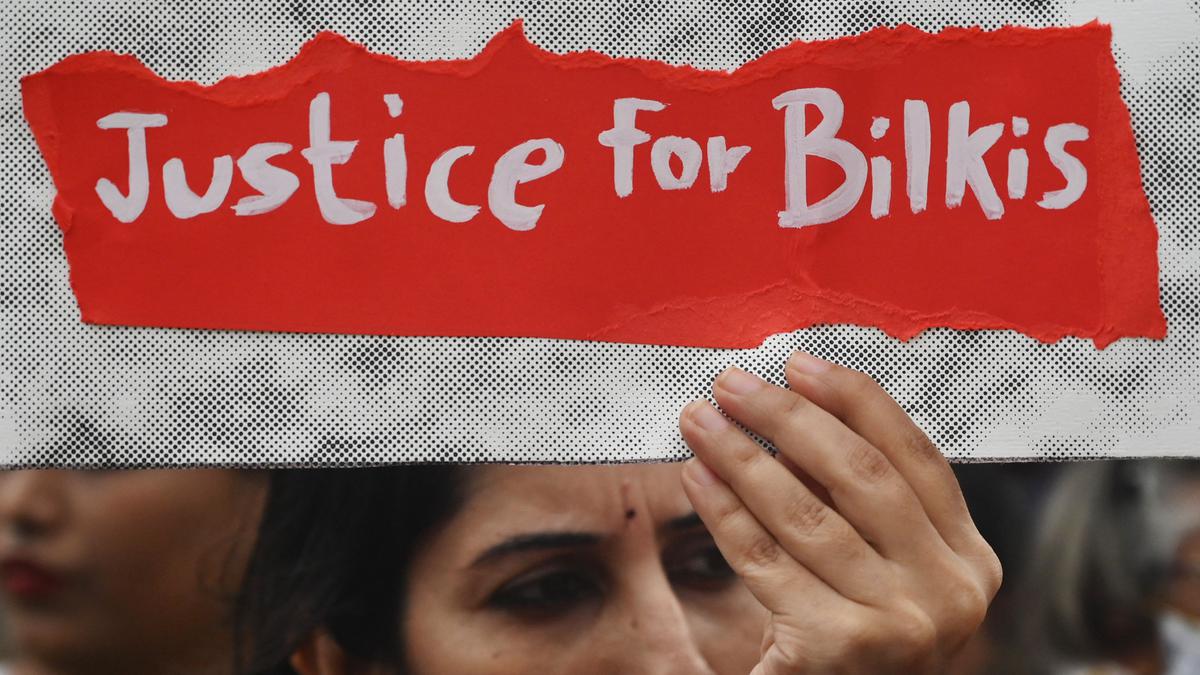
Reflecting on Bilkis Bano’s resilient pursuit of justice
- On January 8,2024 the Supreme Court of India made a landmark ruling in the case of Bilkis Bano Case.
- The court quashed the remission granted by the Gujarat government to 11 individuals convicted in the 2002 Gujarat riots.
Background:
- The convicts were part of a communal mob involved in the gangrape of Bilkis Bano.
- The case symbolises the struggle for justice for survivors of sexual and communal violence.
Matters in Question in the Case
- Justice System's Integrity and Societal Reflection:
- The Supreme Court's decision emphasizes the need for a consistent, impartial application of the law, irrespective of socio-political contexts.
- The verdict is applauded for upholding the legal process and resisting impunity.
- Inadequacy of Prisons:
- Justice B.V. Nagarathna, authoring the judgment, cites Plato's theory of punishment as a means of prevention and reformation.
- However, the jubilant behaviour of the released convicts exposes the flaws in the prison system's ability to deliver genuine rehabilitation
- This also raised questions about the effectiveness of the "curative theory of punishment."
- Systemic Failure and Implications for Survivors:
- Ms. Bano's case highlights the systemic failure to provide permanent justice or relief for survivors,
- Indicating a need for comprehensive re-evaluation of penal institutions and societal norms.
- Ms. Bano's case highlights the systemic failure to provide permanent justice or relief for survivors,
- Perils of Carceral Feminism:
- The article introduces the concept of "carceral feminism,"
- Analyzing the complexities of advocating feminist goals within an increasingly carceral state.
- It emphasizes the distrust in the criminal justice system due to patriarchal biases and questions the exclusive reliance on legal reforms.
- The article introduces the concept of "carceral feminism,"
- Challenges in the Criminal Justice System:
- The criminal justice system, including the police force and medical examination process, is criticized for
- Perpetuating a culture of victim-blaming
- Traumatizing survivors.
- The criminal justice system, including the police force and medical examination process, is criticized for
- Nuanced Approach and Victim-Centred Justice:
- There is need for a more nuanced, victim-centred approach.
- We need to
- Go beyond legal avenues
- Recognizing the limitations of carceral feminism
- Understanding the prison's ability to reform perpetrators.