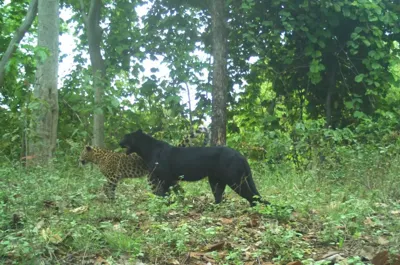
| Event | Rare black panther sighted in Achanakmar Tiger Reserve (ATR), Bilaspur district, Chhattisgarh. |
| Confirmation | Presence confirmed during the tiger census in 2022. |
| Tiger Count | Fourth phase of survey indicates 10 tigers in ATR (7 females, 3 males). |
| Black Panther | Melanistic leopards, either all-black or very dark, are color variants of spotted Indian leopards. Found in densely forested areas of South India. |
| Scientific Name | Panthera pardus. |
| Melanism | Caused by recessive alleles in leopards and dominant alleles in jaguars. Leads to high melanin production. |
| Geographical Range | Southwestern China, Burma, Nepal, Southern India, Indonesia, and Southern Malaysia. In India: Karnataka, Tamil Nadu, Kerala, Maharashtra. |
| Threats | Habitat loss, vehicle collisions, diseases, human encroachment, poaching. |
| Protection Status | IUCN Red List: Vulnerable. CITES: Appendix I. Wildlife (Protection) Act, 1972: Schedule I. |
| Achanakmar Tiger Reserve | Located in Bilaspur district, Chhattisgarh. Established in 1975, declared a tiger reserve in 2009. Part of Achanakmar-Amarkantak Biosphere Reserve. Connects Kanha and Bandhavgarh Tiger Reserves. |
| River | Maniyari River flows through the reserve. |
| Tribal Community | Home to the Baigas, a "Particularly Vulnerable Tribal Group (PVTG)". 25 forest villages in the core area, 75% population Baiga tribe. |
| Vegetation | Tropical moist deciduous vegetation. |
| Flora | Sal, bija, saja, haldu, teak, tinsa, dhawara, lendia, khamar, bamboo, and 600 medicinal plant species. |
| Fauna | Tiger, leopard, bison, flying squirrel, Indian giant squirrel, chinkara, wild dog, hyena, sambar, chital, and over 150 bird species. |