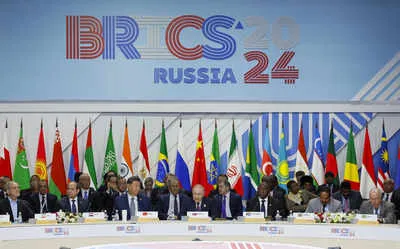
| Why in News | Nigeria joins BRICS as a partner country on January 17, 2025, expanding the bloc's global reach. |
| BRICS Member Countries | Brazil, Russia, India, China, South Africa (BRICS core members); Nigeria joins as a partner. |
| Date of Admission | January 17, 2025. |
| Economic Position | Nigeria is Africa's largest economy and the world's 6th most populous country. |
| Key Objectives | To enhance trade, investment, and collaboration on energy security, infrastructure, and climate change. |
| BRICS Expansion | BRICS now includes 9 partner countries: Nigeria, Belarus, Bolivia, Cuba, Kazakhstan, Malaysia, Thailand, Uganda, Uzbekistan. |
| Historical Context | BRICS formed in 2009, expanded with South Africa in 2010, and has grown to include more nations. |
| Relevance to Nigeria | Strengthens Nigeria's global economic position and supports sustainable development initiatives. |
| BRICS Formation | BRICS was formed in 2009, initially as BRIC, by Brazil, Russia, India, and China. South Africa joined in 2010, making it BRICS. |
| Purpose | BRICS aims to promote economic cooperation, trade, and investment among emerging economies, creating an alternative to Western-dominated global institutions. |
| Economic Influence | Together, BRICS countries represent over 40% of the world's population and approximately 25% of global GDP. |
| BRICS Summits | Annual summits are held to discuss key issues like economic development, climate change, global governance reforms, and South-South cooperation. |
| BRICS Bank | New Development Bank established in 2014 to fund infrastructure projects in developing nations, with an emphasis on sustainable development. |
| Global Governance Reform | BRICS advocates for reforms in institutions like the United Nations, the World Bank, and the International Monetary Fund to better represent emerging economies. |
| Trade and Investment | The bloc promotes trade among member countries, aiming to reduce reliance on the US dollar in international transactions. |