

Iran, Pak, the Baloch militancy
- The recent escalation between Iran and Pakistan, marked by missile strikes and counter-strikes, has added tension to their historically complex relationship.
- Recently, Iranian missiles and drones struck two alleged bases of the Jaish al-Adl, an anti-Iran Baloch militant group, in Pakistan’s Balochistan province.
Background
- Historical Ties
- Pre-1979 Islamic Revolution
- Both countries were allies to the United States.
- Joined the Baghdad Pact, later known as the Central Treaty Organization (CENTO), a military alliance modelled on NATO.
- Iran provided material and weapons support to Pakistan during its 1965 and 1971 wars against India.
- Post-1979: Iran's revolution shifted alliances, leading to distrust due to Pakistan's close ties with the US.
- Geopolitical Differences
- Pakistan aligned with the US post-1979, contributing to Iranian distrust.
- The distrust increased after 9/11 as Islamabad extended unqualified support to the US “War on Terror”.
- Iran's focus on exporting the revolution and Pakistan's ties with Arab allies created geopolitical differences.
- Afghanistan Conflict
- Opposing sides post-Soviet withdrawal: Iran backed the Northern Alliance, while Pakistan supported the Taliban.
- Attempts at Reconciliation
- Periodic attempts to improve ties, influenced by leadership changes.
- Cooperation under leaders like Benazir Bhutto and Asif Ali Zardari, strained during Nawaz Sharif's tenure.
Recent Escalation
- Balochistan Dynamics
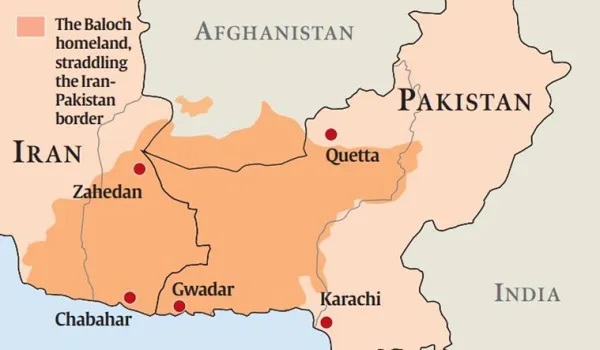
- The 909-km Iran-Pakistan border, known as the Goldsmith Line, stretches from a tripoint with Afghanistan to the northern Arabian Sea.
- Ethnic Baloch live on either side of the line, in the Pakistani province of Balochistan, and the Iranian province of Sistan and Baluchestan.
- Their marginalisation in both countries in subsequent years fuelled several separatist movements.
- Baloch insurgencies, targeting military and civilian sites, led to recent cross-border strikes.
- Jaish al-Adl
- Iranian strikes targeted alleged bases of Jaish al-Adl, a Sunni militant group.
- Pakistani response targeted Baloch Liberation Army and Baloch Liberation Front.
- Civilian Casualties and Retaliation
- Both countries claim civilian casualties in attacks by the other.
- Retaliatory strikes and summoning diplomats signal heightened tensions.
- Iran and Pakistan have earlier cooperated to combat the Baloch insurgency.
Implications and Future Scenario
- India's Perspective
- Over the past few decades, India’s ties with Iran have developed a meaningful dimension.
- They have cooperated in the energy sector, despite the US sanctions on Iran, and India’s rapidly improving ties with the Americans.
- India has been involved in the planning and building of the Chabahar port,
- India mentioned its “uncompromising position of zero tolerance towards terrorism”, acknowledging self-defence actions.
- India has long maintained that Pakistan supports militants.
- De-escalation Challenges
- Economic challenges and insurgency on the Afghan border for Pakistan and pressing concerns for Iran limit potential for further escalation.
- Both countries are likely to seek de-escalation after making statements through strikes.
- Potential Mediators
- International actors, including China and Russia, could play a role in facilitating dialogue.
- Regional forums such as the Organization of Islamic Cooperation may be considered.