

India's first winter of Arctic research: why it matters
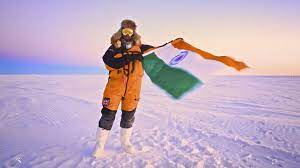
- India is all set to launch its first-ever winter expedition in the Arctic.
- With this, India’s Himadri will be only the fourth research station in the Arctic to be manned year-round.
- Objective: To study the impact of climate change in the Arctic region and address challenges related to the environment.
Importance of Arctic Studies
- The Arctic, situated above the Arctic Circle, has far-reaching effects on global climate due to rising temperatures and declining sea ice extent.
- Potential consequences include rising sea levels, altered atmospheric circulations, and shifts in weather patterns, impacting regions far beyond the Arctic.
Challenges in Arctic Exploration
- Environmental challenges: Extreme cold temperatures limit scientific activities to the summer months.
- Geopolitical tensions and limited space for research stations due to multiple state jurisdictions.
India's First Winter Expedition
- A team of four scientists will embark on India's inaugural winter expedition funded by the Ministry of Earth Sciences.
- Research Areas: atmospheric sciences, astronomy, astrophysics, and climate studies.
- Team will be stationed at Himadri, India's sole research station in Ny-Ålesund, specially equipped for polar night observations.
Evolution of India's Arctic Interests
- India signed the Svalbard Treaty in 1920, enabling operations in the Svalbard archipelago.
- Significant steps include
- Establishment of Himadri (2008)
- Release of India's Arctic Policy (2022)
- Focus: science, research, environmental protection, economic development, transportation, governance and international cooperation.
Global Arctic Research
- Ny-Ålesund, with research stations from ten countries, is a hub for Arctic research.
- Only three stations have year-round human presence.
- India's involvement in international committees and organizations demonstrates its commitment to Arctic studies.
Conclusion
- India's winter expedition signifies a proactive approach to Arctic research.
- It contributes to global scientific efforts in a region crucial for understanding and mitigating climate-related challenges.