

India’s defence budgeting and the point of deterrence
- The Medium Multi-Role Combat Aircraft (MMRCA) program faces challenges as the Indian Air Force (IAF) struggles with depleting squadron strength.
- With elections approaching and potential impacts on the defence budget, there are concerns about maintaining India's deterrence posture.
IAF's Procurement Challenges
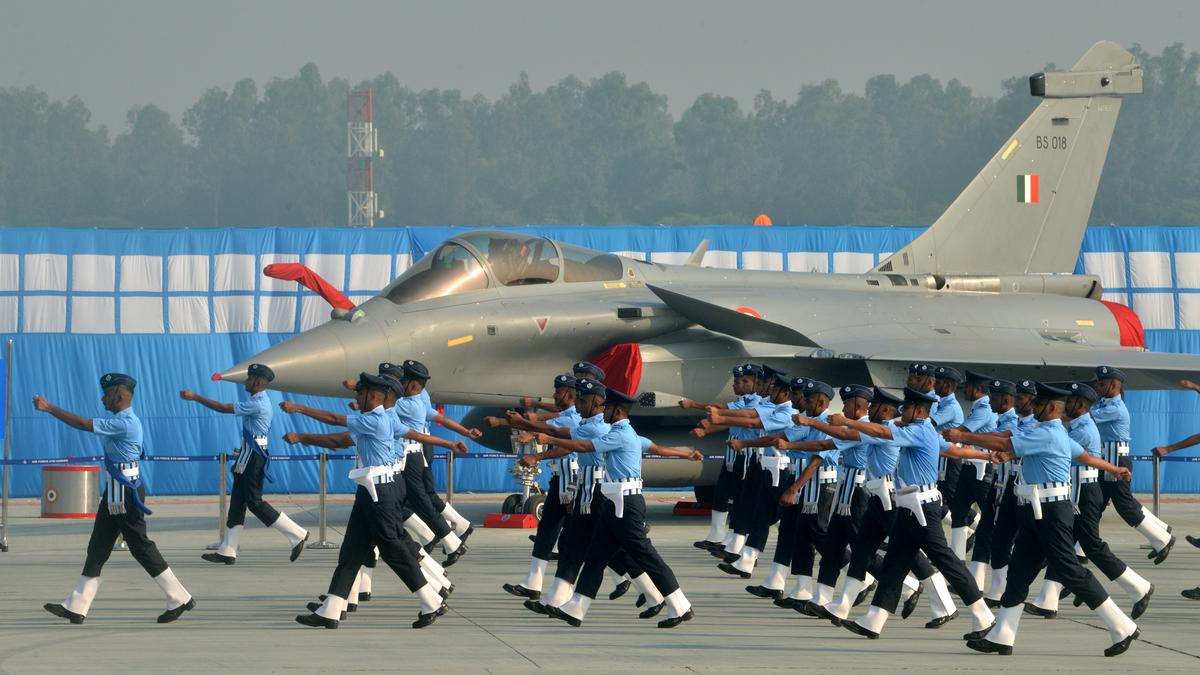
- The drawbacks of the Rafale jet purchase (36 jets instead of the required 126), have resulted in a substantial reduction in the IAF squadron strength to an abysmal 32.
- The focus lies on the importance of a prudent evaluation to determine whether defence budget allocations should be guided by the principle of 'affordable defence' or 'affordable effectiveness.'
Northern Border Threat
- Given the live threat on the northern borders, it is important to prepare for potential conflicts.
- This calls for a careful evaluation of India's war strategy especially amid electoral considerations.
Modernization Across Services
- The need for modernization extends to all branches of the military, including
- Sea power to deter China
- The modernization of the Army
- The budget requirements for the large-sized Army
- The planning and budgeting approach have shifted from a short sharp conflict to preparing for an extended war scenario.
Role of Indigenous Development
- While advocating the Atmanirbhar Bharat drive for self-reliance, there is a strong emphasis on striking a balance between imports and indigenous development to facilitate technological modernization within the armed forces.
- Concerns are raised about the stagnant defence budget underscoring the need for increased research and development expenditure.
- There has been a decrease in the defence expenditure as a percentage of the central government's total expenditure.
- From around 16.4% in 2012-13 to 13.3% in 2022-23.
- This trend underscores the budgetary deficit in capital acquisitions for the Ministry of Defence.’
- The Ministry of Defence had asked for ₹1,76,346 crore in 2023-24 for capital acquisitions.
- However, only ₹1,62,600 crore was allotted, creating a deficit of ₹13,746 crore.
- The Global Innovation Index 2022 pegs India’s research and development expenditure at just 0.7% of its GDP which places it 53rd globally.
- China, incidentally, spent $421 billion in 2022, which is 2.54% of its GDP.
- It reveals India's lower R&D expenditure compared to China, emphasizing the importance of sustained momentum in policy-making and budgeting.
Emphasis on Indigenization
- The government's emphasis on indigenization through initiatives like Innovations For Defence Excellence (iDEX) and service-specific projects is acknowledged.
- However, the long gestation period for such initiatives, calls for consistent momentum and bipartisan statesmanship in both policy-making and budgeting.
Conclusion
- The national security imperatives should not be compromised for electoral imperatives.
- Undermining defense budget priorities in the face of potential threats could be detrimental.
- Examples of other nations increasing their defence budgets in response to China's actions serve as a cautionary reference.