

India increases its tally of Ramsar sites to 80 by adding Five more wetlands to the list
- Recently, the government announced the designation of five new Ramsar sites in India on World Wetlands Day.
- Total Ramsar sites in India increased to 80 from 75, with Tamil Nadu having the most (16 sites), followed by Uttar Pradesh (10 sites).
World Wetlands Day 2024
- Theme: Wetlands and Human Wellbeing, highlighting the essential role of wetlands in flood protection, clean water, biodiversity, and recreational opportunities.
- India, a Party to the Ramsar Convention since 1982, has seen a significant increase in Ramsar sites, reaching 80 from 26 in the last ten years.
New Ramsar Sites
- Ankasamudra Bird Conservation Reserve (Karnataka).
- It is a man-made village irrigation tank rich in biodiversity built centuries back.
- It supports more than 1% of the biogeographic population of Painted Stork and Black-headed Ibis.
- Aghanashini Estuary (Karnataka)
- It is formed at the confluence of the Aghanashini River with the Arabian Sea.
- The brackish water of the Estuary provides diverse ecosystem services including flood and erosion risk mitigation, biodiversity conservation and livelihood support.
- The wetland helps in traditional fish farming in the estuarine rice fields (locally known as Gazni rice fields), bivalve shell collection and salt production.
- Magadi Kere Conservation Reserve (Karnataka)
- It is a man-made wetland constructed to store rainwater for irrigation purposes.
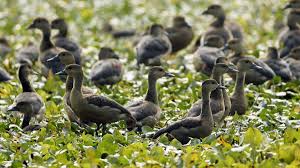
- Harbours two vulnerable species, namely the Common pochard and River tern and four near-threatened species, namely the Oriental Darter Black-headed Ibis Woolly-necked Stork and Painted Stork
- It is also one of the largest wintering grounds for the Bar-headed goose.
- Karaivetti Bird Sanctuary (Tamil Nadu)
- One of the largest inland wetlands of Tamil Nadu, it is a significant source of groundwater recharge for the area.
- Longwood Shola Reserve Forest (Tamil Nadu)
- It serves as habitat for the globally endangered Black-chinned Nilgiri Laughing thrush, Nilgiri Blue Robin and vulnerable Nilgiri Wood-pigeon.
Prelims Takeaway
- Ramsar Convention
- New Ramsar Sites
- World Wetlands Day 2024