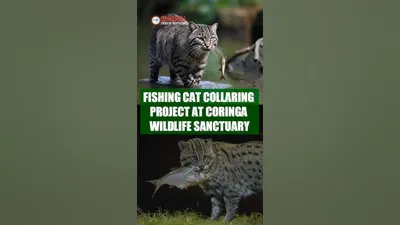
| Project Name | India's First Fishing Cat Collaring Project |
| Location | Coringa Wildlife Sanctuary (CWS), Kakinada, Andhra Pradesh |
| Sanctuary Details | - Area: 235 sq km |
| - India's second-largest mangrove habitat |
| - Located at Godavari estuary, confluence of Coringa River and Bay of Bengal |
| - Home to the endangered fishing cat |
| Fishing Cat Population Trends | - First survey (2018): 115 individuals |
| - Sightings increased significantly over the past five years |
| Mangrove Conservation | - Environment Development Committees (EDCs): 420 locals involved |
| - Community-Based Eco-Tourism (CBET) for alternative livelihoods |
| Collaring Project | - Executed by Wildlife Institute of India-Dehradun |
| - Duration: 3 years |
| - Study: Home range, behaviour, habitat ecology, feeding habits, space use |
| - Plan: Collar 10 fishing cats with GIS-equipped devices |
| - Completion: March or April 2025 |
| Ramsar Convention Proposal | Andhra Pradesh Forest Department seeks Ramsar Site status for CWS |
| Wildlife Institute of India | - Autonomous institution under Ministry of Environment, Forest and Climate Change |
| - Established: 1982 |
| - Location: Dehradun, Uttarakhand |
| Fishing Cats | - Scientific Name: Prionailurus viverrinus |
| - Size: Twice the size of a house cat |
| - Diet: Fish, frogs, crustaceans, snakes, birds, carcasses |
| - Habitat: Eastern Ghats, estuarine floodplains, tidal mangroves, freshwater habitats |
| - Threats: Wetland destruction, shrimp farming, hunting, ritual practices, poaching |
| - Protection Status: IUCN Red List (Vulnerable), CITES (Appendix II), Schedule I (India) |