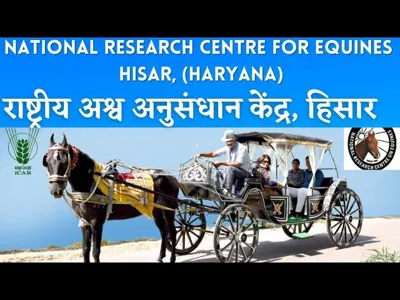
| Event | ICAR-National Research Centre on Equines (ICAR-NRC Equine), Hisar, designated as a WOAH Reference Laboratory for Equine Piroplasmosis. |
| Announcement | Officially announced at the 92nd WOAH General Session and World Assembly of Delegates in May 2025. |
| Key Disease | Equine Piroplasmosis: Caused by tick-borne protozoan parasites Babesia caballi and Theileria equi. Affects horses, donkeys, mules, and zebras. |
| Seroprevalence in India | 15-25% nationally, with up to 40% in high-risk areas. |
| Economic Impact | Causes health issues, productivity decline, and trade restrictions. |
| Diagnostic Tools | Developed by NRC Equine: ELISA, Indirect Fluorescent Antibody Test, Competitive ELISA, blood smear examination, MASP in-vitro culture system, and PCR for antigen detection. |
| Equine Population in India | 0.55 million equines (horses, ponies, donkeys, mules) as per the 20th Livestock Census. |
| Breakdown | - Horses and ponies: 0.34 million- Donkeys: 0.12 million- Mule: 0.08 million- Major populations in Uttar Pradesh, Rajasthan, Gujarat, and Haryana. |
| NRC Equine's Role | Collaborate globally, provide diagnostic services, share technical expertise, and advance research on equine piroplasmosis. |
| WOAH Reference Labs in India | NRC Equine is the fourth Indian lab to achieve WOAH status, joining labs recognized for Avian Influenza, Rabies, PPR, and Leptospirosis. |
| WOAH Overview | - Established as OIE, now WOAH, a global standard-setting body.- Headquarters: Paris, France.- 183 member countries, including India.- Guidelines acknowledged by World Trade Organization (WTO). |