

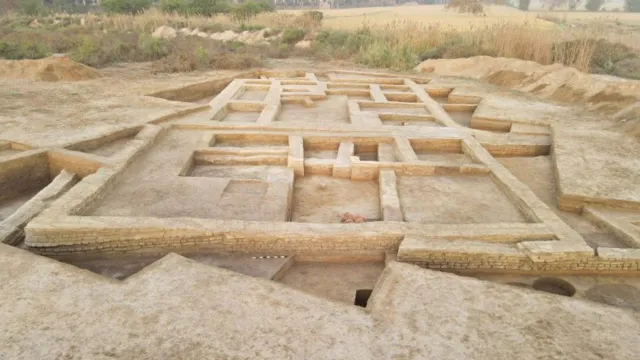
Haryana Declares Two Harappan Sites as Protected Monuments
| Aspect | Details |
|---|---|
| Event | Haryana government declares two Harappan sites in Bhiwani as protected monuments and archaeological sites. |
| Notification Issued By | Haryana's Principal Secretary for Heritage and Tourism. |
| Act Invoked | Haryana Ancient and Historical Monuments and Archaeological Sites and Remains Act, 1964. |
| Protected Site | Mitathal (10 acres). |
| Protection Measures | Fencing and deploying a guard. |
| Historical Significance | Mitathal: Evidence of Copper-Bronze Age culture (3rd-2nd millennia BCE). |
| First Identification | Mitathal: Identified in 1913 with a hoard of Samudra Gupta coins. |
| Excavations | Conducted since 1968, revealing Harappan traditions in urban planning, architecture, and craftsmanship. |
| Artifacts Found | Beads, copper implements, proto-historic material, well-burnt pottery, geometric designs, terracotta objects. |
| Second Protected Site | Tighrana. |
| Archaeological Importance | Tighrana: Insights into post-Harappan settlements, Chalcolithic agricultural communities (2,400 BCE). |
| Early Settlers | Sothians: Lived in mud-brick houses, engaged in agriculture, used wheel-made pottery. |
| Discoveries at Tighrana | Bead-making, jewellery production, green carnelian bangles. |
| Harappan Civilization | Also known as Indus Valley Civilization (IVC), flourished around 2500 BCE. |
| Key Figures in Excavation | Daya Ram Sahni (Harappa, 1921-22), Rakhal Das Banerji (Mohenjo-daro, 1922), Sir John Marshall (DG of ASI). |