

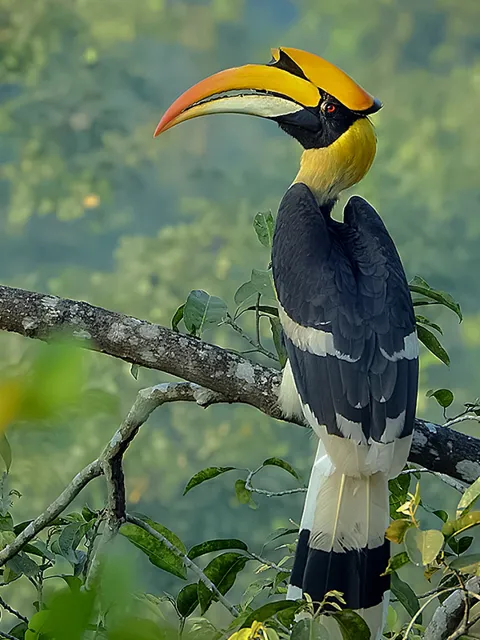
Great Hornbill Coastal Sighting
Core Event
- Rare Sighting (May 2025): Kerala’s state bird (Great Hornbill, Buceros bicornis) spotted in Kakkampara coastal belt (Ezhimala, Kannur).
- Unusual Habitat: Typically resides in Western Ghats’ forests (Silent Valley, Athirappilly). First documented coastal presence.
- Behavior: Foraged on fig trees (Ficus exasperata) near Ezhimala Naval Academy for ~2 weeks.
Species Profile
- Features:
- Size: 95-120 cm long | 151-178 cm wingspan | ~3 kg weight.
- Distinct Traits: Black-white plumage, hollow casque (used in mating/combat), colored preen gland secretions.
- Sexual Dimorphism: Males have red irises; females have white.
- Ecology:
- Habitat: Wet evergreen/deciduous forests (600-2000 m elevation).
- Diet: Frugivorous (fruit-eater) but preys on small animals opportunistically.
- Role: Keystone species for seed dispersal.
- Conservation Status:
- IUCN: Vulnerable
- WPA 1972: Schedule I (highest protection)
Current Affairs:
- Connects to National Mission on Himalayan Studies (model for Western Ghats conservation).
- Highlights Kerala’s Biodiversity Strategy & Action Plan.
PYQ Correlation
-
Mains 2017: “How does biodiversity vary in India? How is the Biological Diversity Act, 2002 helpful in conservation?”
-
Prelims 2020: Q. Considered a “keystone species”, the Great Hornbill is vital for:
(a) Seed dispersal (b) Pollination (c) Soil aeration (d) Water purification
Ans: (a) -
Map: Mark Ezhimala (Kannur), Silent Valley (Palakkad), Athirappilly (Thrissur).