| Key Topic | Details |
|---|---|
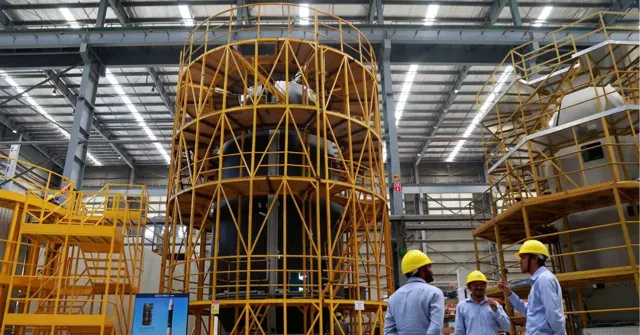
| Event | Godrej Aerospace delivered the first human-rated Vikas engine to ISRO. |
| Purpose | The engine will power the L110 stage of the LVM-3 rocket, designated for Gaganyaan, India's first manned space mission. |
| Significance | Marks a technological milestone and boosts India's self-reliance in space capabilities. |
| Human-Rated Engine | Designed for enhanced safety, reliability, and performance, ensuring crew safety during ascent. |
| Validation | Involves rigorous testing, including redundancy systems, fault tolerance mechanisms, and extensive ground testing. |
| Gaganyaan Mission | India's first crewed space mission, aiming to send a three-member crew into low Earth orbit for up to three days. |
| Global Position | India will become the fourth nation (after the USA, Russia, and China) to demonstrate independent human spaceflight capabilities. |
| Key Milestones | • First uncrewed test flight: Early 2026 (crew escape, flight stability, module recovery) • Crewed mission: Targeted for 2027 • Astronaut training: Ongoing with international support. |
| Godrej Aerospace | Over 40 years of contribution to India's space programme, including engines for PSLV, GSLV, LVM-3, and components for Chandrayaan, Mangalyaan, and NASA-ISRO NISAR satellite. |
| Static Facts | • Launch Vehicle: LVM-3 (India's heaviest rocket) • Engine: Human-rated Vikas engine (L110 stage) • Developed by: Godrej Aerospace • Fuel Type: Liquid propulsion system |
| Original Development | Based on the French Viking engine (1970s). |
| Gaganyaan Crew Size | 3 astronauts. |
| Mission Duration | Up to 3 days in low Earth orbit. |

Workflow
Login
Contact Counsellor