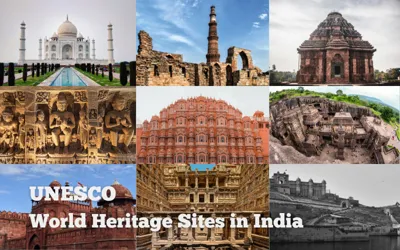
| Total UNESCO Sites in India | 42 |
| Cultural Sites | 34 |
| Natural Sites | 7 |
| Mixed Sites | 2 |
| Notable Cultural Sites | Taj Mahal, Red Fort, Ajanta & Ellora Caves, Gateway of India, Qutub Minar, Hawa Mahal, Victoria Memorial, Khajuraho Temple, Mahabodhi Temple, Jallianwala Bagh, Mehrangarh Fort, India Gate, Gwalior Fort, Amer Fort, Charminar |
| Notable Natural Sites | Western Ghats, Sundarbans National Park |
| Taj Mahal | Built in 1632 by Shah Jahan; White marble tombstone; UNESCO World Heritage Site. |
| Red Fort | Commissioned in 1638; Mughal architecture; Site for Independence Day speech. |
| Ajanta & Ellora Caves | Rock-cut temples; Discovered by British officer John Smith; Depicts Buddhism, Hinduism, Jainism. |
| Gateway of India | Built in 1924; Access point for British entry/exit; Popular tourist spot in Mumbai. |
| Qutub Minar | Height: 240 ft; Indo-Islamic architecture; Tallest individual tower in the world. |
| Hawa Mahal | Built for Maharaja Sawai Pratap Singh's queens; 953 windows; Known as "Palace of Winds". |
| Victoria Memorial | Built during British rule; Dedicated to Queen Victoria; Spread over 64 acres. |
| Khajuraho Temple | Features sculptures of love and beauty; Reflects Hinduism and Jainism. |
| Mahabodhi Temple | Site of Gautam Buddha's enlightenment; Dates back to Emperor Ashoka's time. |
| Jallianwala Bagh | Memorial for the Jallianwala Bagh Massacre victims; Located in Amritsar. |
| Mehrangarh Fort | Built by Rao Jodha; Features 7 entrance gates; Used as a setting in films. |
| India Gate | Height: 42 m; War memorial for WWI and Anglo-Afghan War soldiers; Features Amar Jyoti flame. |
| Gwalior Fort | Called "Pearl amongst the fortresses in India"; Witnessed rise and fall of empires. |
| Amer Fort | Built by Maharaja Man Singh; UNESCO World Heritage Site; Located in Jaipur. |
| Charminar | Built to mark the end of a plague; Features four minarets; Symbol of Hyderabad. |