

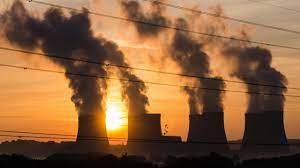
Equity concerns in banning fossil fuel extraction
- The response from governments and corporations regarding climate change has been inadequate, leading to a surge in climate change litigation worldwide.
- It is also resulting in growing momentum favouring phasing out of fossil fuel subsidies and the banning of the extraction of fossil fuel itself.
- The momentum is also growing in favour of a Fossil Fuel Non-Proliferation Treaty.
Production Gap Report 2023
- An academic proposal suggests a coal elimination treaty by 2030, aiming to cease coal mining and burning.
- This is motivated by the Production Gap Report (PGR 2023), which highlights a significant disparity between fossil fuel production plans (projecting a 110% increase by 2030) and the Paris Agreement (limit warming to 1.5°C compared to pre-industrial levels).
Growing Momentum for Change
- There is an increased support for phasing out fossil fuels, evidenced by references in UNFCCC conventions and decisions made at COP26 and COP28.
- COP26 made a reference to phasing down unabated coal power and phasing out inefficient fossil fuel subsidies.
- COP28 also adopted a decision relating to the transitioning away from fossil fuels in energy systems, so as to achieve net zero emissions by 2050.
- Aligning these proposals with principles like Common but Differentiated Responsibilities and Nationally Determined Contributions is required.
Challenges in Transitioning
- Countries heavily reliant on fossil fuel revenues face challenges in transitioning away from fossil fuels due to economic dependence.
- Developed countries like Canada, the US and the UK have greater capacity to transition due to diversified economies and higher per capita income.
International Law and Fossil Fuels
- While states have the right to exploit natural resources within their territories, they have a duty not to cause significant harm to other states.
- However, the application of this duty in the context of global environmental impact remains unclear.
India's Situation
- India, despite progress in renewable energy, still heavily relies on fossil fuels, particularly in the power sector.
- Transitioning away from fossil fuels requires adequate support and creation of alternative economic opportunities, especially in regions reliant on coal mining.
- India’s subsidies on kerosene oil have also come under scrutiny in the West as it is found to be inconsistent with Article 2(1)(c) of the Paris Agreement and is also considered as inefficient subsidies.
Conclusion
- A coordinated global effort to phase out fossil fuels is crucial, considering economic disparities between nations and the principles of international law.