

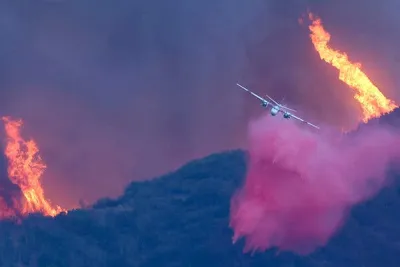
The Environmental Impact of Pink Fire Retardant in Wildfire Control
| Summary/Static | Details |
|---|---|
| Why in the news? | California's Wildfire Defense: The Use of Pink Fire Retardant |
| What is Pink Fire Retardant? | A chemical mix, mainly ammonium polyphosphate, used to slow or stop fires. |
| Main Use | Sprayed ahead of the fire to coat vegetation and prevent oxygen from fueling flames. |
| Color | Pink to improve visibility for firefighters to track and create fire lines. |
| Environmental Concerns | Contains toxic metals like chromium and cadmium, which pollute water and harm aquatic life. |
| Health Risks | Linked to cancer, kidney, and liver diseases in humans. |
| Water Pollution | Contaminates rivers and streams, affecting ecosystems. |
| Effectiveness | Effectiveness depends on weather, terrain, and fire conditions, with diminishing effectiveness due to climate change. |
| Amount Used (2009-2021) | Over 440 million gallons of fire retardant released in the U.S. |
| Toxic Metal Release | 400 tons of heavy metals were released during the same period, impacting the environment. |