

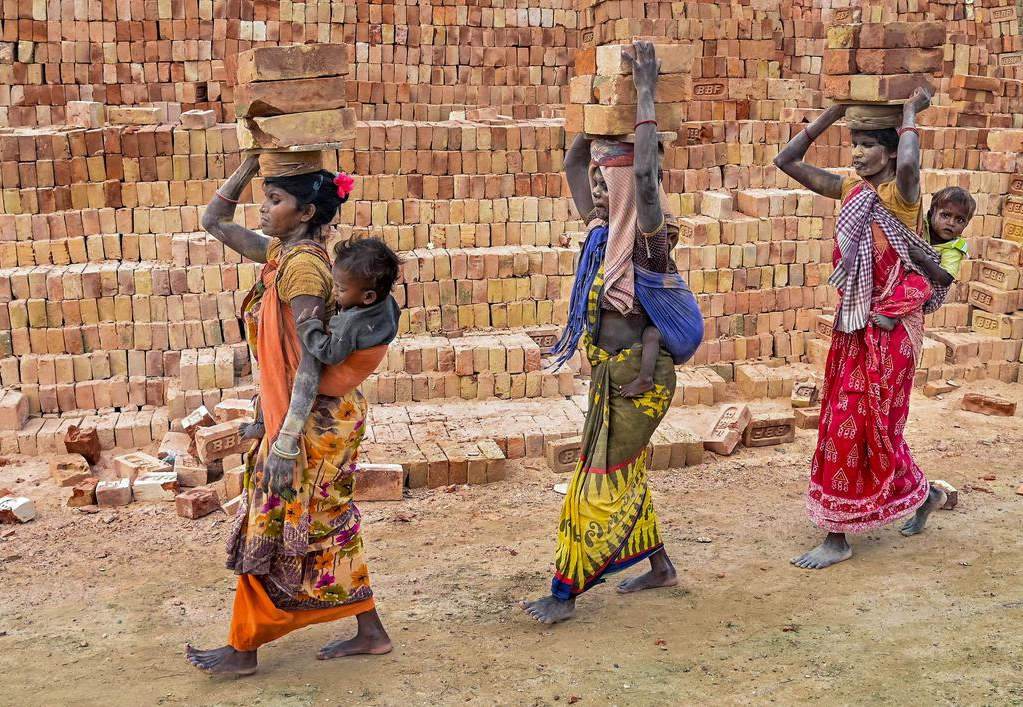
Development led by corporates, not women
- The G20 Summit in Delhi adopted a Declaration, establishing a "working group on the empowerment of women."
- Past "working groups" have shown limited implementation, raising questions about the efficacy of such initiatives.
- The Declaration itself admits, “At the midway point to 2030, the global progress on SDGs is off-track with only 12% of the targets on track.”
Gender Equality
- The Declaration emphasizes the importance of women's participation and commitment to addressing global challenges.
- However, the term "women-led development" introduced by the Government of India lacks clarity in its meaning.
Critique of Development Models
- Development models in democracies, especially in developed countries, have led to significant global, intra-country, and gender-based inequalities.
- The core of these models relies on the "trickle-down theory," which privileges big business.
- The G20 Declaration reaffirms the importance of private enterprise in driving sustainable economic transformations.
- However, alignment of "women-led development" with the existing macro development model is questioned.
Women-led Development Schemes
- Women-led development schemes conceal the reality of decreasing government investment in projects and schemes meant for women’s development.
- The Gender Budget, meant to prioritise women's development, has seen a decrease in its total allocation and a skewed distribution between Part A and Part B.
- Part A includes schemes which are 100% for women.
- Part B includes all government schemes where at least one-third of the expenditure is supposedly for women.
- In 2023-24, the expenditure in Part A was at its lowest at around 39% of the total, while Part B made up 61% of expenditure of the Gender Budget.
Economic Independence Challenges
- Economic independence is crucial for women's development, but India has seen a decline in women's share in regular waged work.
- According to an analysis of the Periodic Labour Force Survey (PLFS), the share of women in regular waged work fell in India, from 21.9% in 2018-2019 to 15.9% in 2022-2023.
- Over 95% of women work in the unorganised sector, with no job and income insecurity.
- Budgetary cuts in rural work projects negatively impact women, particularly in states where women constitute a significant portion of the workforce.
- Women, especially Dalits and Adivasis, bear the brunt of economic policies favouring the richest 1%.