

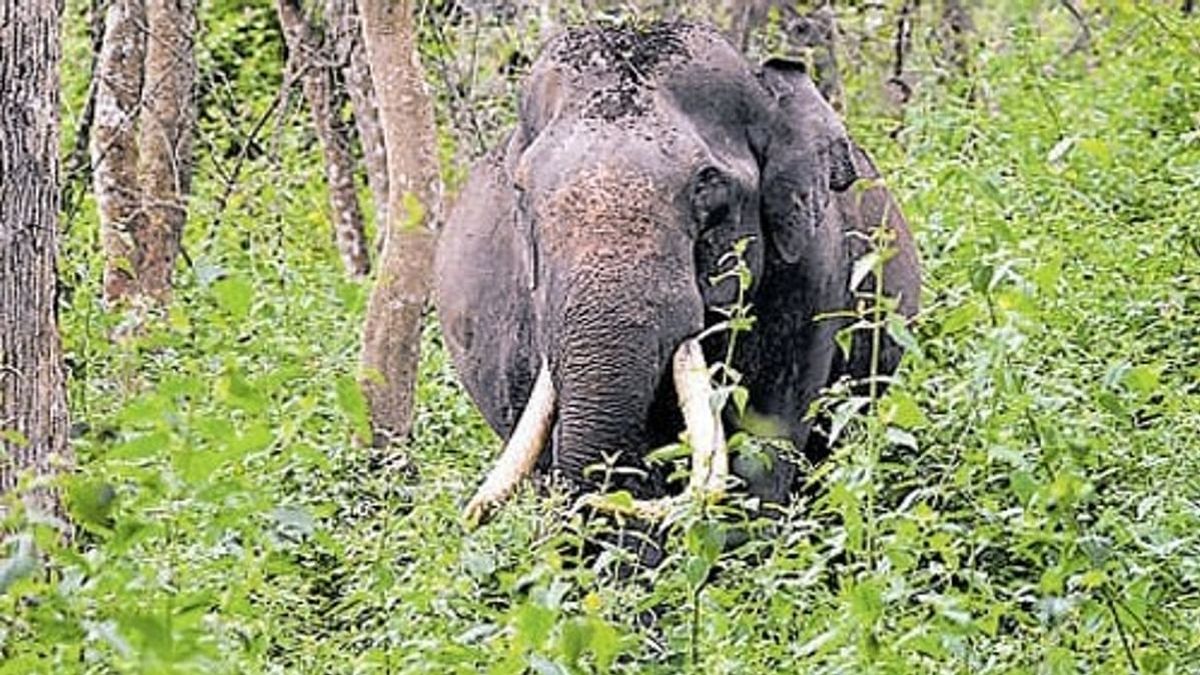
Death in Wayanad: What is behind Kerala's rising human animal conflict
- A recent tragic incident where a wild elephant killed a man in Wayanad highlights the increasing human-animal conflict.
Rising human-animal conflict in Kerala
- Increased incidence of wild animals, mainly elephants, tigers, bison, and wild boars, attacking human beings have been reported from across Kerala.
- Districts like Wayanad, Kannur, Palakkad, and Idukki are particularly affected.
- Beyond posing risk to humans, these attacks also devastated Kerala’s agriculture sector.
- Government Data
- 2022-23 recorded 8,873 wild animal attacks, of which, 4193 were by wild elephants, 1524 by wild boars, 193 by tigers, 244 by leopards, and 32 by bison.
- Of 98 reported deaths, 27 were due to elephant attacks.
Wayanad worst-affected
- Wayanad, which boasts of a forest cover of 36.48%, has lost 41 lives to elephant attacks and seven to tiger attacks over the last decade.
- Its geographical location plays a role in this; the interconnected forested areas contribute to animal movement across state borders.
- The district’s forests are a part of a greater forested area comprising Nagarhole Tiger Reserve, Bandipur National Park, and BR Tiger Reserve in Karnataka, and Mudumalai Tiger Reserve and Sathyamangalam Forest in Tamil Nadu.
Factors Contributing to Conflict
- A 2018 study found two major drivers of human-animal conflict in the state.
- It was conducted by the Dehradun’s Wildlife Institute of India and the Periyar Tiger Conservation Foundation in Kerala.
- Decline in forest quality due to cultivation of alien plants (like acacia and eucalyptus) in forest tracts for commercial purposes.
- Changing agricultural practices that lure animals, which do not find enough fodder in their habitats, out of forests into farmland.
- Waste disposal, habitat fragmentation, and increased human presence exacerbate the conflict.
Efforts to Address the Crisis
- Kerala has implemented various schemes such as elephant-proof trenches and solar-powered fencing.
- Eco-restoration programs have also been undertaken to restore natural habitats and prevent animals from entering settlements.
- Relocation initiatives and Rapid Response Teams are also established to mitigate conflict instances.
- In 2022, Kerala requested the Centre a sum of Rs 620 crore to tackle the crisis but was asked to find innovative solutions locally.