

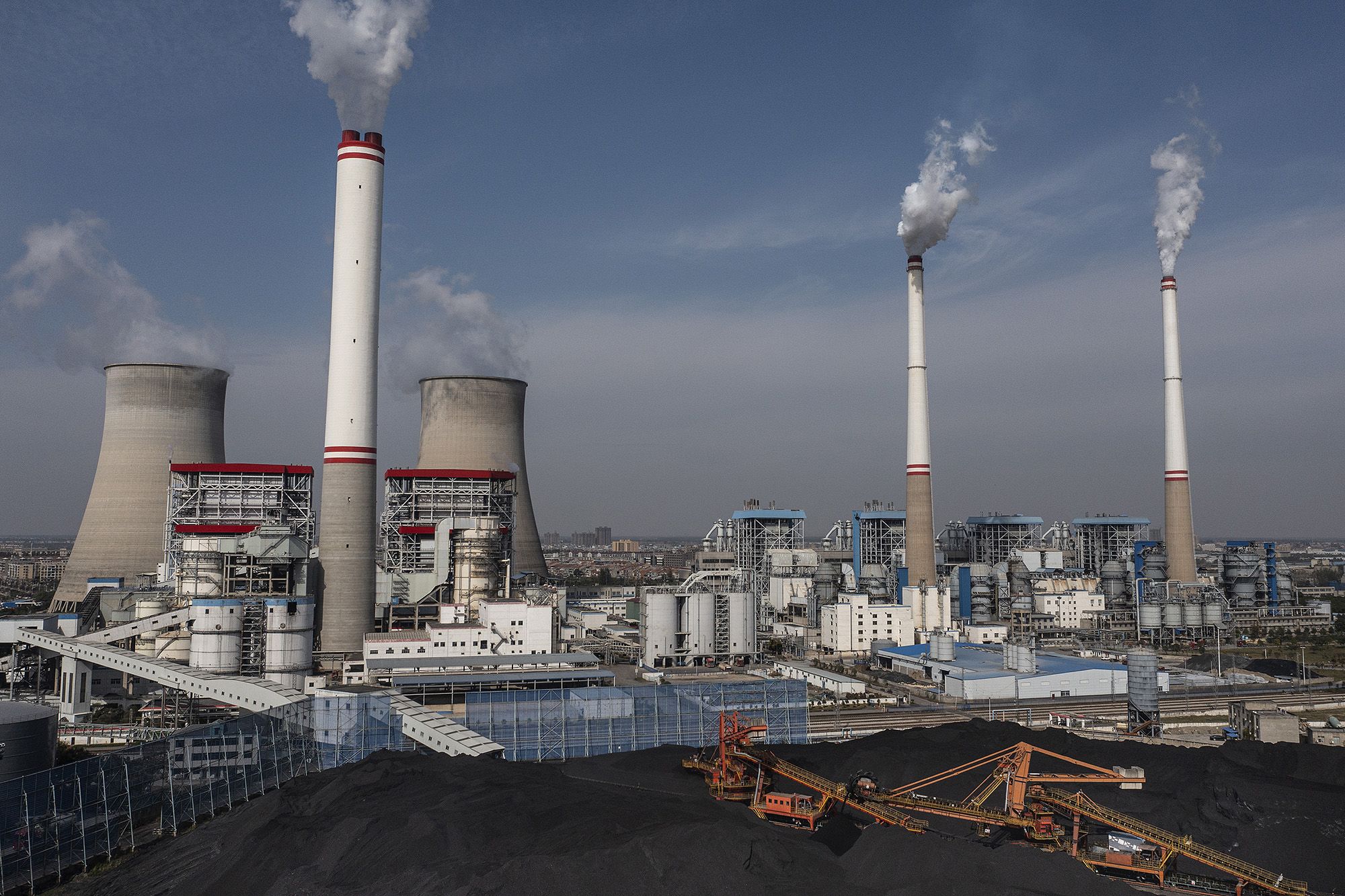
China 2023 coal power approvals rose, putting climate targets at risk
- China approved 114 gigawatts (GW) of coal power capacity in 2023, up 10% from a year earlier, with the world's top carbon polluter now at risk of falling short on climate targets after sanctioning dozens of new plants.
Key Highlights
- China has vowed to "strictly control" new coal-fired generation capacity, and has also connected record numbers of new wind and solar plants to its grid.
- But after a wave of electricity shortages in 2021, China also embarked on a coal power permitting boom that could slow its energy transition
- According to analysis by U.S. think tank Global Energy Monitor (GEM) and the Helsinki-based Centre for Research on Energy and Clean Air (CREA).
- "Drastic action" is now required to meet 2025 carbon and energy intensity goals, and China could also struggle to meet a target to raise the share of non-fossil fuels in its total energy mix to 20% by 2025
- China's CO2 emissions rose by an estimated 5.2% in 2023, and are up 12% since 2020, CREA lead analyst Lauri Myllyvirta wrote in a separate note published by Carbon Brief
Background of 1.5 Degrees Celsius Warming Target?
- The Paris Agreement aims to limit the temperature increase to 2 degrees Celsius by the end of this century.
- This target is considered significant, but there are a couple of important things to remember.
- The 2 degrees Celsius target was not determined based on strict scientific evidence.
- Instead, it was initially proposed by an economist named William Nordhaus in the 1970s.
- The Alliance of Small Island States pushed for the target to be lowered to 1.5 degrees Celsius, leading to further retrofitting of future scenarios to meet this goal.
- According to the Intergovernmental Panel on Climate Change (IPCC), the leading scientific body on climate change, if current trends continue, the world is likely to reach 1.5°C of warming by 2030-2052.
- Also, the IPCC Special Report on the difference in impacts between 1.5°C versus 2°C warming suggests that tropical countries
- Such as India are projected to experience the largest impacts on economic growth because of climate change.
Prelims Takeaway
- IPCC
- non-fossil fuels