

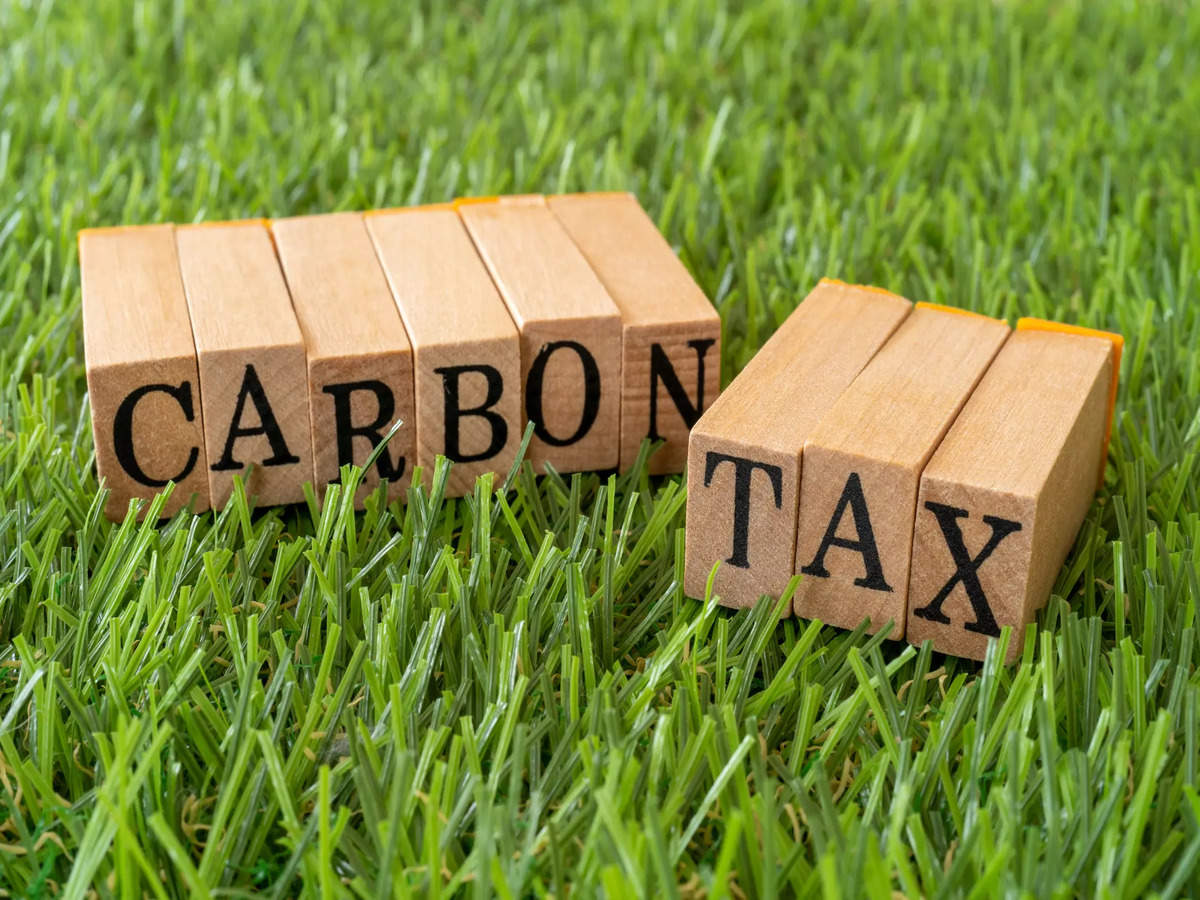
Centre considers compensation for exporters hit by UK, EU carbon tax
- The Indian government is considering various relief measures to mitigate the impact of the Carbon Border Adjustment Mechanism (CBAM).
- Introduced by the European Union (EU) and the UK, it is expected to affect India's iron, steel and aluminium exports worth $8-$9 billion.
Carbon Border Adjustment Mechanism (CBAM)
- CBAM is part of the “Fit for 55 in 2030 package", which is the EU’s plan to reduce greenhouse gas emissions by at least 55% by 2030 compared to 1990 levels.
- It is a policy tool aimed at reducing Carbon Emissions by ensuring that imported goods are subject to the same carbon costs as products produced within the EU.
- Both argue that CBAM aims to prevent carbon leakage, the movement of production and emissions from one country to another
- CBAM came into effect on October 1, 2023, while the actual tax imposition by the EU is set for 2026.
- The UK has announced its version of CBAM, effective by 2027.
Relief Measures
- To support affected exporters and maintain global competitiveness, the government is exploring compensation options.
- Possible measures include seeking a longer transition time, repatriation of duties and collaborative mechanisms to enhance product competitiveness.
Challenges and WTO Dispute
- India has challenged the CBAM at the World Trade Organization (WTO), arguing that it violates special and differential treatment (SNDT) provisions.
- The provisions advocate longer time periods for developing nations to implement agreements.
- Addressing such measures in Free Trade Agreements (FTAs) poses challenges.
Against Environmental Law
- Trade experts criticize CBAM for potentially violating the principle of international environmental law.
- The law states that all states are responsible for addressing global environmental destruction yet not equally responsible.
- Common but differentiated responsibilities (CBDR) assumes all the more significance for India that barely contributes one-seventh of world’s carbon emission.
- Concerns are raised about the EU's expectations on export pricing discipline, hindering India's ability to incentivize green energy consumption in its industry.
Prelims Takeaway
- Carbon Border Adjustment Mechanism (CBAM)
- Common But Differentiated Responsibilities (CBDR)
- World Trade Organization (WTO)
- Fit for 55