

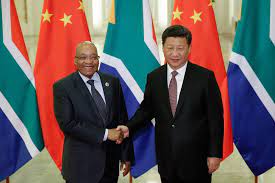
Analysing China’s ties with Africa
- The complex relationship between China and Africa is gaining attention globally, with implications for India.
Historical Context
- Chinese influence in Africa has ancient origins, with early explorations by figures like Zeng He in the 15th century.
- Common experiences and ideologies drove China-Africa relations in the 20th century, marked by opposition to colonialism and economic development goals.
- The Bandung Conference in 1956 and Premier Zhou Enlai's visits in the 1960s solidified diplomatic ties.
Evolution of Relations
- Shift from 'war and revolution' to 'peace and development' in the 1980s.
- Forum on China-Africa Cooperation (FOCAC) established in the past decade, institutionalising relations.
- Economic cooperation became a key focus in the 1990s, with China's foreign minister starting annual visits in African capitals since 1991.
Current State of Affairs
- Sino-African relations cover political, defense, economic, and cultural aspects.
- China's assertiveness in the western Indian Ocean and active participation in the FOCAC process.
- China-Africa trade grows significantly, reaching $107 billion in 2008, with China importing over 20% of its oil from Africa.
Conflicting opinions on China's role:
- supporters emphasize mutual benefit, while critics label China as 'exploitative' and 'extractive.'
India's Perspective
- India has deep historical ties with Africa, but the gap between India and China in Africa is widening.
- Denying rivalry is not feasible; both nations vie for Africa's attention, assets, and markets.
- A balanced approach for India involves monitoring China's activities, enhancing engagement wisely, and leveraging natural advantages.
Conclusion
- China's presence in Africa is expanding, requiring India to increase its engagement thoughtfully and rapidly.
- A combination of greater activism, sensitivity, and synergy will position India to be seen as doing both better and more in Africa.