

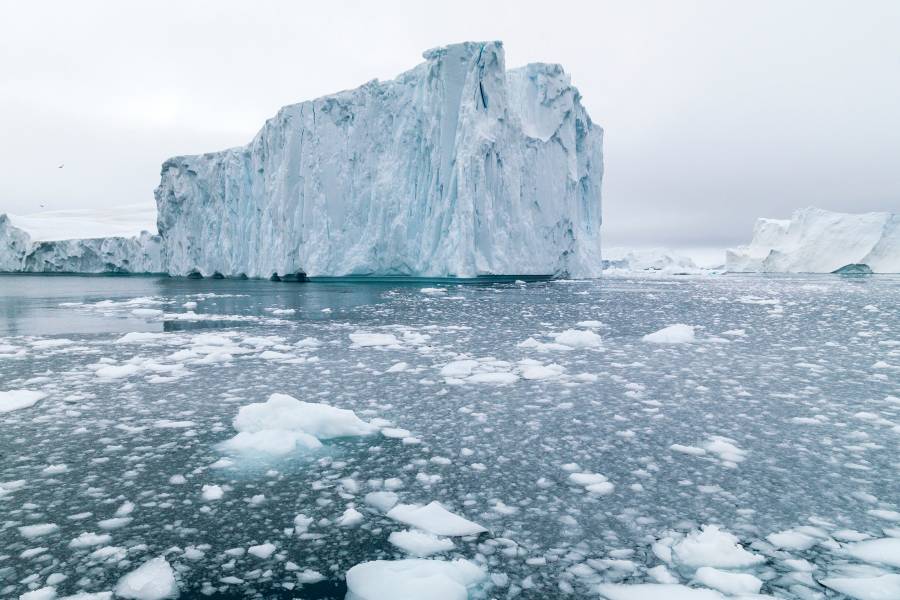
An icy warning: On threats from contracting glaciers
- Recently, the World Meteorological Organization released a report titled “The Global Climate 2011-2020”.
- It gives a broad view of the planet’s response to greenhouse gas emissions.
The Global Climate 2011-2020 report
- It reveals a global trend of glaciers thinning by an average of one metre annually from 2011 to 2020.
- Despite regional variability, glaciers worldwide are consistently shrinking, with some reference glaciers having already disappeared.
- Reason: The nourishing winter snow is completely melting away during summer.
Projected Disappearances
- Glaciers in Africa, including those on the Rwenzori Mountains and Mount Kenya are expected to vanish by 2030 and those on Kilimanjaro by 2040.
- Rapid growth of pro-glacial lakes raises the risk of glacier lake outburst floods (GLOF), impacting ecosystems and livelihoods.
- Glaciers, a crucial part of the cryosphere, serve as a barometer for the climate crisis.
GLOF Events and Recent Catastrophes
- The Chungthang dam in Sikkim was destroyed due to a GLOF event caused by a melting glacier, emphasising the real-time impact.
- The 2013 Uttarakhand floods were cited as an example of glacier melt contributing to a major flooding disaster.
Alarming Rate of Glacier Disappearance
- Report by the International Centre for Integrated Mountain Development
- It indicates that glaciers in the Hindu Kush Himalayas disappeared 65% faster in the 2010s compared to the previous decade.
- Predictions suggest a 55% to 75% decline in glacier volume by the end of the century due to global greenhouse gas emissions.
- This means sharp reductions in freshwater supply in the immediate vicinity of 2050.
Way Forward
- Lack of awareness and early warning systems for glacier-related risks, such as GLOF events, pose significant threats.
- The glacier-related risks should be elevated to the same category as cyclones, floods, and earthquakes.
- There is a need to make comprehensive risk assessments, map regions of vulnerability and commission infrastructure development with the highest standards of care.